How to Invest in Tokenized Real Estate With $100 in 2026: RealT, Lofty AI, and Roofstock Compared
Tokenized fractional real estate makes single-family rentals investable with $50. Here is the practical 2026 guide to RealT, Lofty AI, and Roofstock On Chain - with realistic returns, risks, and a $500 first-investment plan.

Walk past any economist's whiteboard in 2010 and 'fractional real estate investing for $100' would have been written down as a joke. Real estate was the asset class that taught patient capital - minimum buy-in $200,000, six-week closing, lawyers, title insurance, illiquid for years. In 2026, the math has flipped. You can open an app on your phone, look at a verified single-family rental in Detroit or a multi-family building in Cleveland, buy $50 worth of fractional ownership tokens, and start receiving weekly USDC distributions from the rent. The whole transaction takes seven minutes.
This is the practical 2026 guide to investing in tokenized real estate as a small retail investor - what platforms to use, what returns to actually expect, what risks the marketing pages don't emphasize, and whether the category makes sense in a portfolio that already includes a publicly traded REIT.
How tokenized real estate actually works
A platform identifies and acquires a property - typically a single-family rental, a multi-family building, or a small commercial property. The property is held inside a special-purpose vehicle (SPV), usually a Delaware LLC or Wyoming trust. The SPV issues digital tokens on a blockchain (Ethereum, Algorand, Polygon are the most common), each representing a fractional beneficial interest in the SPV - and therefore in the property's net rental income and appreciation.
You buy tokens on the platform, the SPV's records reflect your ownership, and you receive distributions in stablecoin (USDC primarily) on a weekly, monthly, or quarterly schedule, depending on the platform. When the property is sold or refinanced, you receive your proportional share of the proceeds. Some platforms allow you to sell your tokens on a secondary market before the property exits; others require you to hold to maturity.
Two important nuances. First, you do not own the property directly - you own a token that represents a beneficial interest in an LLC that owns the property. The legal layer matters in bankruptcy, dispute, or fraud scenarios. Second, the tokens are usually classified as securities under U.S. law (Reg D, Reg A+, or Reg S exemption), which constrains who can buy them and on what secondary venues they can trade.

The 2026 retail-friendly platforms compared
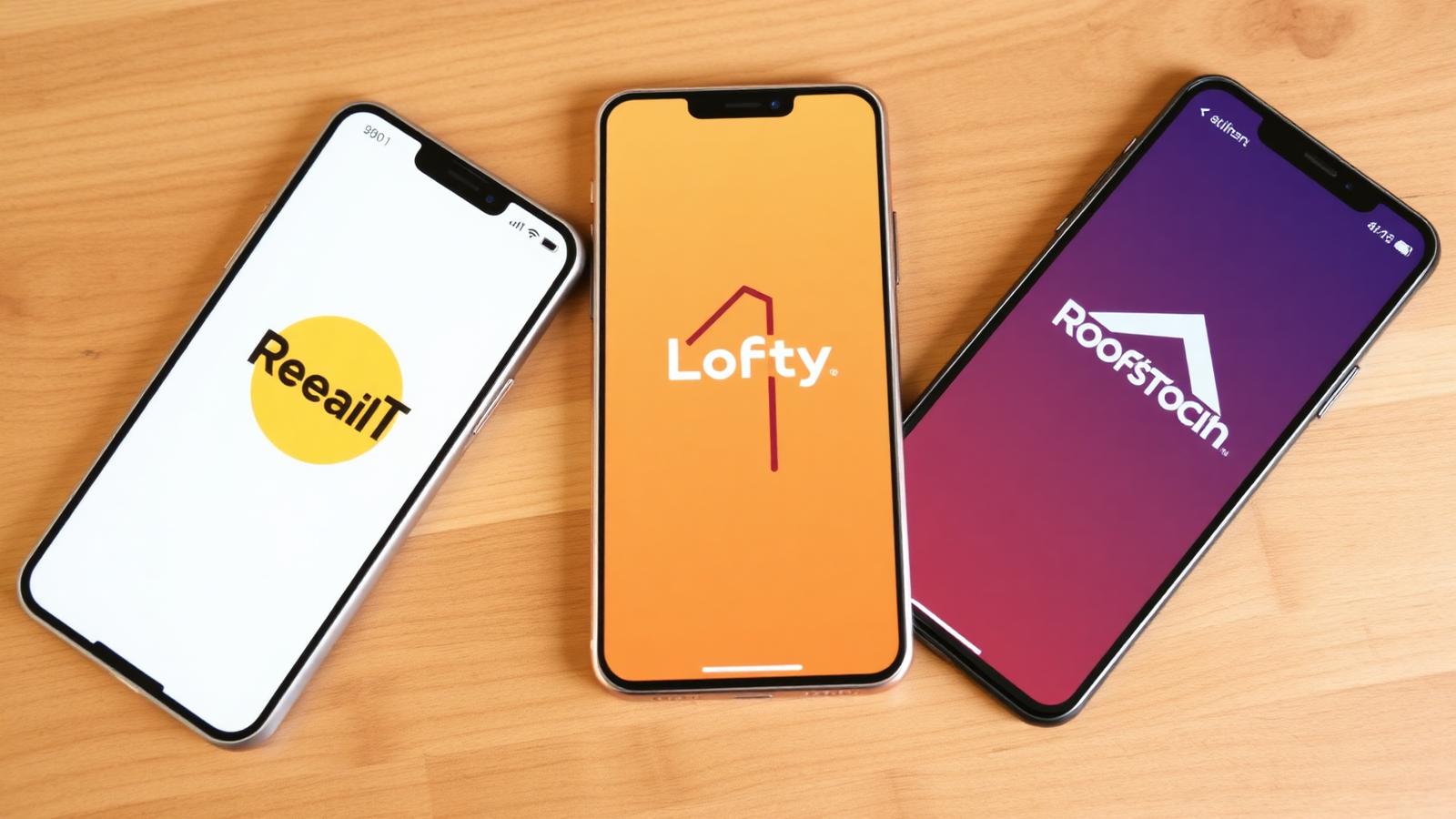
RealT - single-family rentals, low minimums
RealT is the longest-running retail-tokenized-real-estate platform, dating to 2019. It focuses on single-family rentals in U.S. Rust Belt markets - primarily Detroit, Cleveland, Toledo, and Birmingham, Alabama. Minimum investment is approximately $50 per token. Distributions are paid weekly in USDC. Total tokenized AUM is around $120M as of Q2 2026.
Pros: lowest entry minimum in the market, established track record (six-plus years), transparent property-level financials, weekly distributions. Cons: secondary-market liquidity is genuinely thin (selling a $200 token position can take days to weeks), Rust Belt property selection introduces concentrated geographic risk, and property-management quality varies by city.
Lofty AI - Algorand-based, daily distributions
Lofty AI launched in 2022 on the Algorand blockchain, with $50 minimums and a focus on properties in growing southern U.S. markets (Florida, Texas, Carolinas, Tennessee). It distributes rental income daily in USDC, which makes the cash-flow experience feel especially tangible. Lofty publishes property-specific cap rates and rental yields up front, and uses AI tools to assist with property selection.
Pros: daily distributions, growth-market property selection, low minimums, smooth UX. Cons: shorter operating history than RealT, smaller property inventory, secondary-market liquidity is improving but not deep.
Roofstock On Chain - institutional-quality SFR portfolios
Roofstock is one of the largest single-family-rental marketplaces in the U.S. Its 'On Chain' product, launched in 2022 and expanded through 2025, tokenizes institutional-quality SFR portfolios on Ethereum. Minimums are higher ($5,000 typical), the properties are more thoroughly underwritten, and distributions are quarterly. Roofstock's institutional-grade due diligence and property management arguably make this the lowest-operational-risk option in the category.
Honorable mentions
Propy (tokenized residential real-estate transactions; less of an investment platform), Vesta Equity (home-equity tokenization), HoneyBricks (multi-family commercial tokenization, accredited only). All worth tracking, but RealT, Lofty, and Roofstock On Chain are the three retail-accessible options where most beginner-to-intermediate retail investors should start in 2026.
What returns can you actually expect?
Honestly, in 2026, retail-tokenized single-family rentals advertise gross rental yields of 8–12% and net yields (after property management, vacancy, taxes, insurance, repairs) of 5–8%. Add or subtract estimated property appreciation - historically 2–4% annually for the Rust Belt markets RealT focuses on, and 4–6% for Sun Belt markets Lofty focuses on - and total expected returns fall in the 7–14% annual range, before platform fees.
Compare to a publicly traded U.S. residential-REIT ETF (VNQ, REZ, RES) which has historically returned 7–10% annually with daily liquidity, professional diversified property management, and zero operational involvement on your part. The honest assessment: tokenized real estate is not obviously a higher-return product than a public REIT for most investors. It is a different product, with different trade-offs.
Where tokenized real estate offers genuine advantages over a public REIT:
- Specific property selection - if you have a thesis on a specific market or property type, tokenized real estate lets you express it; a REIT does not.
- Direct rental cash flow visibility - you see the actual rent collected on the actual property, not a smoothed REIT distribution.
- Non-U.S. investor access to dollar-denominated U.S. real estate - for an investor in Brazil, Nigeria, or the Philippines wanting USD-denominated U.S. property exposure, tokenized real estate is more accessible than purchasing through a U.S. broker.
- Inflation hedge with current-pay yield - for inflation-conscious investors, the combination of rental cash flow and real-asset exposure is attractive.
The risks the marketing pages soft-pedal
1. Secondary-market liquidity
This is the largest practical risk. The platforms operate secondary markets where you can list tokens for sale, but order books are often thin. Selling a $1,000 position in a niche property can take weeks at advertised prices. If you need the cash quickly, expect to discount 5–20% from the indicated value to find a buyer.
2. Property-level operational risk
A tokenized rental property is still a rental property. Tenants miss rent, furnaces break, hailstorms damage roofs. The platform's property manager handles these events, but they reduce distributions in the affected month. Diversification across multiple properties - minimum 8–10 - is the only real mitigation.
3. Platform risk
If the platform itself fails, the recovery process for tokenized property interests is untested at scale. The legal wrapper (the SPV) should survive the platform's failure, but operational continuity - collecting rent, paying expenses, distributing to token holders - would require an external administrator stepping in. Concentrate platform risk: don't hold 100% of your tokenized portfolio on one platform.
4. Tax complexity
U.S. tax treatment of tokenized real estate is similar to direct real estate ownership: rental income is ordinary income, depreciation flows through, capital gains apply on sale. Most platforms generate K-1s or 1099s. The complexity is real, and a CPA familiar with crypto and real estate is worth the consult fee.
5. Geographic concentration
RealT's Rust Belt focus and Lofty's Sun Belt focus both concentrate geographic risk. The 2008 housing crisis and the 2022–2024 commercial real-estate downturn both illustrated how geographically concentrated portfolios can underperform broadly diversified ones. If you commit material capital to tokenized real estate, diversify across cities and platforms.

How to start: a $500 first-investment plan
If you want to test tokenized real estate with a deliberately small commitment, the cleanest first step in 2026:
- Decide your platform allocation: $300 to RealT (multiple Detroit/Cleveland properties), $200 to Lofty (one Sun Belt property). Diversifies across two platforms, two property types, and two regions.
- Open accounts at both platforms; complete KYC (24–48 hours each).
- Fund accounts with USDC from Coinbase or your bank ACH (most platforms accept both).
- Buy 4–6 tokens at $50 each on RealT across 4–6 different properties; buy a single $200 position on Lofty in one property.
- Watch the weekly distributions roll in for 90 days; assess whether the cash-flow rhythm and property-management quality match your expectations.
- If you like the experience, scale up gradually - but never to more than 5–10% of your total invested portfolio.
This is genuinely an asset class where it is worth paying tuition with small capital before deploying serious capital. The product works very differently in your portfolio than a stock or a bond, and the only way to internalize that is to live with it for 90 days.
Where the category is going next
Three trends through 2027. First, the institutional players (BlackRock, Apollo, Hamilton Lane) will likely launch retail-accessible tokenized commercial-real-estate products with $1,000 minimums and quarterly liquidity. Second, secondary-market liquidity should improve as more platforms route trades through shared liquidity pools. Third, the SEC's continuing rule-making on tokenized securities will gradually clarify the legal position, potentially enabling broader retail access to currently accredited-only products.
The bottom line for retail investors in 2026: tokenized real estate is a real product, with real cash flows, real legal protections, and real risks. It is not a get-rich-quick play, and it is not obviously better than a public REIT for most use cases. But for an investor who wants direct property-level exposure with low minimums, who is comfortable with operational involvement and limited liquidity, and who can patiently diversify across 8–10 properties on 2–3 platforms, the category now offers something that simply did not exist five years ago - and that is worth a small, deliberate position in a diversified portfolio.
Frequently Asked Questions
Can I really invest in real estate with $100 in 2026?
Yes. Platforms like RealT and Lofty AI offer tokenized fractional ownership of single-family rental properties with minimums as low as $50 per token. You receive a proportional share of rental income (paid weekly or daily in USDC) and any appreciation when the property is sold. The legal structure is a special-purpose vehicle (SPV) that holds the property and issues tokens representing beneficial interests.
What is the best tokenized real estate platform for beginners?
For most beginners in 2026, RealT (lowest minimums, established six-year track record, weekly distributions) and Lofty AI (daily distributions, Sun Belt growth markets, polished UX) are the two best starting points. For investors with $5,000+ minimums and a preference for institutional-grade due diligence, Roofstock On Chain is the strongest pick.
How much can you actually earn from tokenized real estate?
Net rental yields (after property management, vacancy, taxes, insurance, repairs) typically run 5–8% annually. Adding estimated property appreciation of 2–6%, total expected returns range from 7% to 14% annually - before platform fees. By comparison, a publicly traded U.S. residential-REIT ETF (VNQ, REZ, RES) has historically returned 7–10% with full daily liquidity and zero operational involvement.
What are the biggest risks of investing in tokenized real estate?
The five big risks: (1) thin secondary-market liquidity - selling can take weeks at indicated prices; (2) property-level operational risk - tenants, repairs, vacancies; (3) platform risk if the operator fails; (4) tax complexity - K-1s, depreciation, ordinary-income treatment of rent; (5) geographic concentration - most platforms focus on specific U.S. regions, concentrating exposure.
Is tokenized real estate a security?
Yes - under U.S. law, tokenized real estate interests are typically classified as securities and offered under Reg D, Reg A+, or Reg S exemptions from full SEC registration. This affects who can purchase them (some are accredited-only) and where they can trade on secondary markets (only on registered alternative trading systems or compliant secondary-market venues).
Can non-U.S. investors buy tokenized U.S. real estate?
Yes, on most platforms, subject to KYC verification and the platform's available regional regulatory exemptions. Non-U.S. investors looking for dollar-denominated U.S. real-estate exposure often find tokenized platforms more accessible than purchasing through a U.S. broker, with lower minimums and direct rental cash flow visibility.
Should I invest in a tokenized real estate or a public REIT?
For most retail investors with no specific market thesis, a publicly traded REIT (VNQ, REZ) is the better default - daily liquidity, professional diversified management, lower operational complexity. Tokenized real estate makes sense for investors with a specific property thesis, non-U.S. investors needing USD real-estate exposure, or those who specifically want direct property-level cash-flow visibility and inflation hedging.
Sources
- RealT - Property-Level Financial Disclosures https://realt.co/
- Lofty AI - Platform Documentation https://lofty.ai/
- Roofstock - On Chain Investment Guide https://www.roofstock.com/onchain
- SEC - Crowdfunding and Reg A+ Investor Guidance https://www.sec.gov/education/capitalraising/building-blocks/regulation-crowdfunding
According to our editorial policy, every source link above was opened and checked against the claim it supports on .