Best Spot Crypto ETFs in 2026: Bitcoin, Ethereum, Solana, and the Complete IBIT vs Direct-Custody Guide
BlackRock's IBIT now holds 700,000 BTC. Spot Solana ETFs cleared the SEC in October 2025. Vanguard finally opened up. Here is the complete 2026 guide to the spot crypto ETF market.

In January 2024, the U.S. Securities and Exchange Commission approved the first spot Bitcoin exchange-traded funds. By the end of 2025, the SEC had also approved spot Ethereum and spot Solana ETFs, and Vanguard - the world's largest mutual-fund company and a long-standing crypto skeptic - had quietly opened its brokerage to nearly every major crypto fund on the market. In two and a half years, crypto went from a regulatory pariah to a standard line item on a Vanguard, Fidelity, or Schwab brokerage statement.
That is the story of spot crypto ETFs in 2026: not a new technology, but a new distribution channel. The asset class is the same Bitcoin, Ethereum, and Solana you could already buy on Coinbase. What changed is that you can now hold them in your IRA, your 401(k), and your taxable brokerage - alongside SPY and VTI - without ever touching a crypto exchange. This guide is the most thorough 2026 walkthrough of where the market actually stands, which ETFs are worth owning, and the question every reader is asking: should I hold Bitcoin in an ETF or directly?
The 2026 spot crypto ETF lineup, fund by fund
Three asset classes are now wrapped in spot ETFs: Bitcoin (since January 2024), Ethereum (since July 2024, with staking added in late 2025), and Solana (since October 2025). A fourth wave - XRP, Litecoin, and possibly a basket index - is widely expected by late 2026.
As of Q2 2026, total assets under management across U.S. spot crypto ETFs sit at approximately $215 billion, with the breakdown as follows.
- Spot Bitcoin ETFs: ~$165 billion combined AUM. BlackRock's IBIT alone holds approximately 700,000 BTC (roughly $70 billion at current prices), making it one of the firm's top revenue drivers and the single largest spot Bitcoin product in the world.
- Spot Ethereum ETFs: ~$38 billion combined AUM. Staking-enabled variants (notably from Fidelity and BlackRock) gained traction after the SEC permitted staked-yield pass-through in late 2025.
- Spot Solana ETFs: ~$12 billion combined AUM, with Goldman Sachs disclosing $108M and Jane Street $74M in early March 2026.
Why BlackRock's IBIT became the franchise
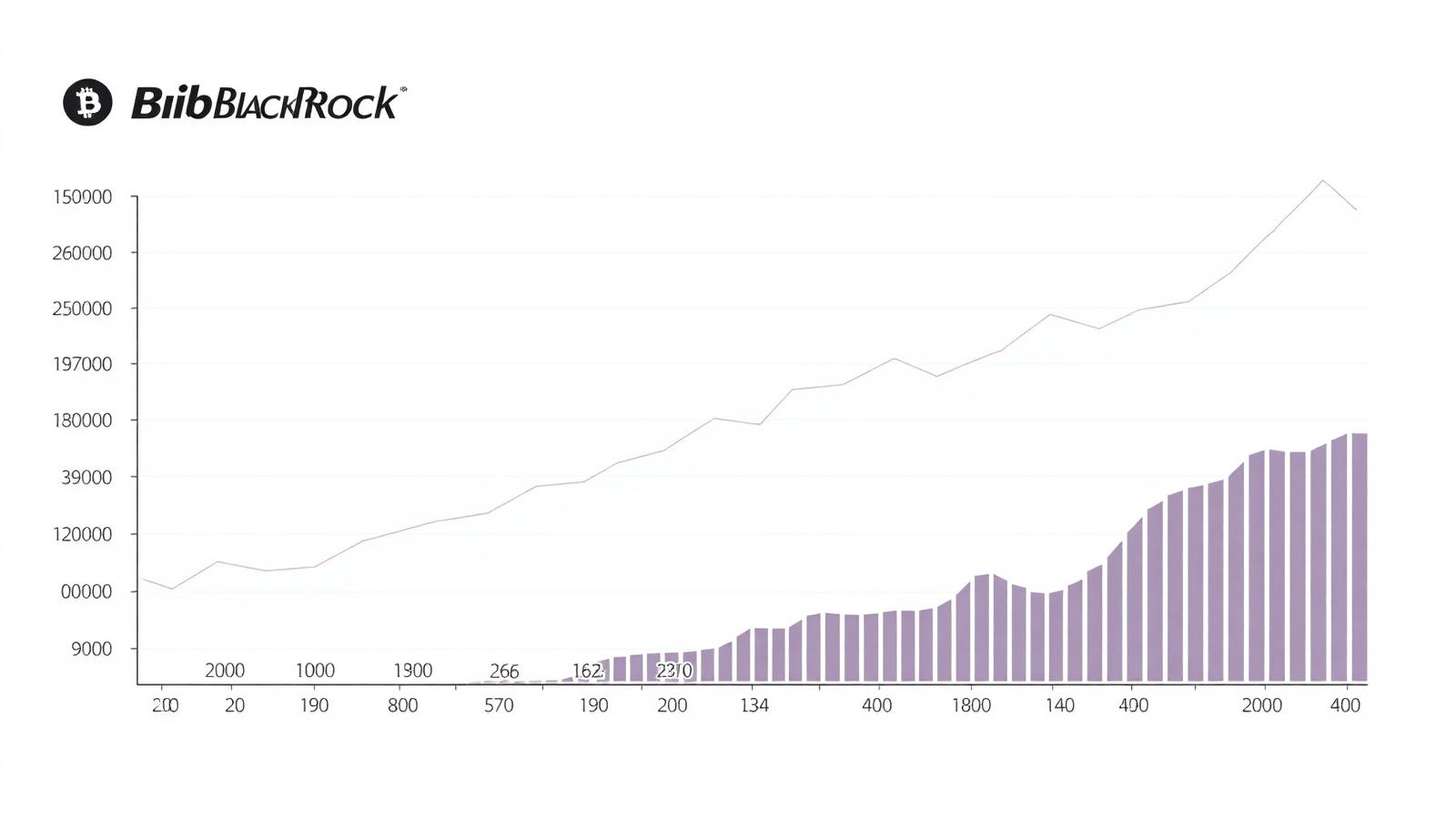
Of the eleven spot Bitcoin ETFs that launched in January 2024, BlackRock's iShares Bitcoin Trust (IBIT) ran away with the market. It now holds more than 700,000 BTC, more than the next three competitors combined. Three reasons: BlackRock's distribution muscle (the largest asset manager in the world has the deepest relationships with RIAs and broker-dealers); a tight 0.12% expense ratio after the initial fee waiver expired; and creative-redemption mechanics that have kept tracking error consistently under 5 basis points.
For most retail investors, IBIT is the default choice for Bitcoin exposure inside a traditional brokerage account. Fidelity's FBTC is a credible alternative with similar economics; Bitwise's BITB and Ark's ARKB offer slightly different fee profiles. Grayscale's GBTC, the legacy product converted from a trust in January 2024, charges a meaningfully higher 1.5% expense ratio and has steadily lost share - there is little reason to own it in 2026 except for legacy tax-lot considerations.
Spot Solana ETFs: the new frontier
The SEC approved spot Solana ETFs in October 2025, making SOL the third cryptoasset to reach that milestone after Bitcoin and Ethereum. The product wave was led by Bitwise, VanEck, 21Shares, and Grayscale (which converted its existing Solana Trust). By March 2026, cumulative inflows had passed $900 million, with institutional names including Goldman Sachs and Jane Street disclosing material positions in their 13-F filings.
Solana ETFs differ from their Bitcoin counterparts in one crucial way: many include native staking exposure. Solana's network earns approximately 6–7% APR for stakers (after validator fees); the staking-enabled ETFs pass through that yield to holders, less an expense ratio of roughly 1%. For investors looking for crypto exposure with a real income component, this is a meaningful difference from non-staking Bitcoin products.
Vanguard's pivot - and what it means
For the first decade of crypto's institutional rise, Vanguard was the holdout. The firm refused to list spot Bitcoin ETFs on its brokerage platform when they launched in January 2024 - a decision its CEO publicly defended as consistent with Vanguard's investment philosophy. In late 2025, with new leadership and overwhelming client demand, Vanguard reversed course. As of Q2 2026, Vanguard Brokerage clients can buy and hold most major spot Bitcoin and Ethereum ETFs, and selected mutual funds with crypto exposure.
The practical impact is enormous. Vanguard administers retirement assets for over 50 million Americans, including a sizable share of the $11+ trillion in U.S. workplace 401(k) plans. The firm's reversal opens the door for crypto exposure as a standard retirement-portfolio component within five years.
ETF vs holding crypto directly: the honest comparison
The single most common question we receive in 2026 from investors new to crypto: should I buy IBIT in my brokerage, or should I open a Coinbase account and buy Bitcoin directly? The honest answer turns on five factors.
1. Custody
ETF: BlackRock holds the Bitcoin in cold storage with Coinbase Custody (institutional-grade, insured, audited). You hold an ETF share. If you die, your heirs inherit it through the normal brokerage process. Direct: you hold the private keys (or trust an exchange to hold them). If you lose the keys and have no backup, the Bitcoin is permanently inaccessible. If you trust an exchange, you bear the exchange's counterparty risk.
2. Fees
ETF: 0.12–0.25% annually, depending on the issuer. Direct: zero ongoing custody fee if you self-custody, but you pay transaction fees to acquire and (eventually) sell. Over a 10-year hold, the ETF fee compounds - roughly 1.2% to 2.5% drag - but is offset by the operational simplicity.
3. Tax treatment
ETF: standard 1099-B at year end; long-term capital gains rates if held over 12 months. Direct: same long-term capital gains treatment, but you must track every transaction, every cost basis, every gas fee. Crypto tax software (Koinly, CoinTracker) helps but adds another $100–$300 per year in cost.
4. Retirement accounts
ETF: can be held in IRAs, Roth IRAs, and (increasingly) 401(k) plans. Direct: requires a specialty IRA custodian (BitcoinIRA, iTrust Capital, Alto), with custody fees of 1–3% per year. For most investors, the ETF is the cleaner retirement vehicle.
5. What you actually own
ETF: a beneficial interest in a basket of Bitcoin held by a custodian. You cannot send it, spend it, lend it on DeFi, or use it as collateral. Direct: you own the actual asset. If the only thing you want is price exposure, the ETF wins. If you want to use Bitcoin as Bitcoin - for self-custody philosophy, for international transfer, for DeFi integration - direct ownership is the only option.

The retirement-account angle: Bitcoin in your IRA
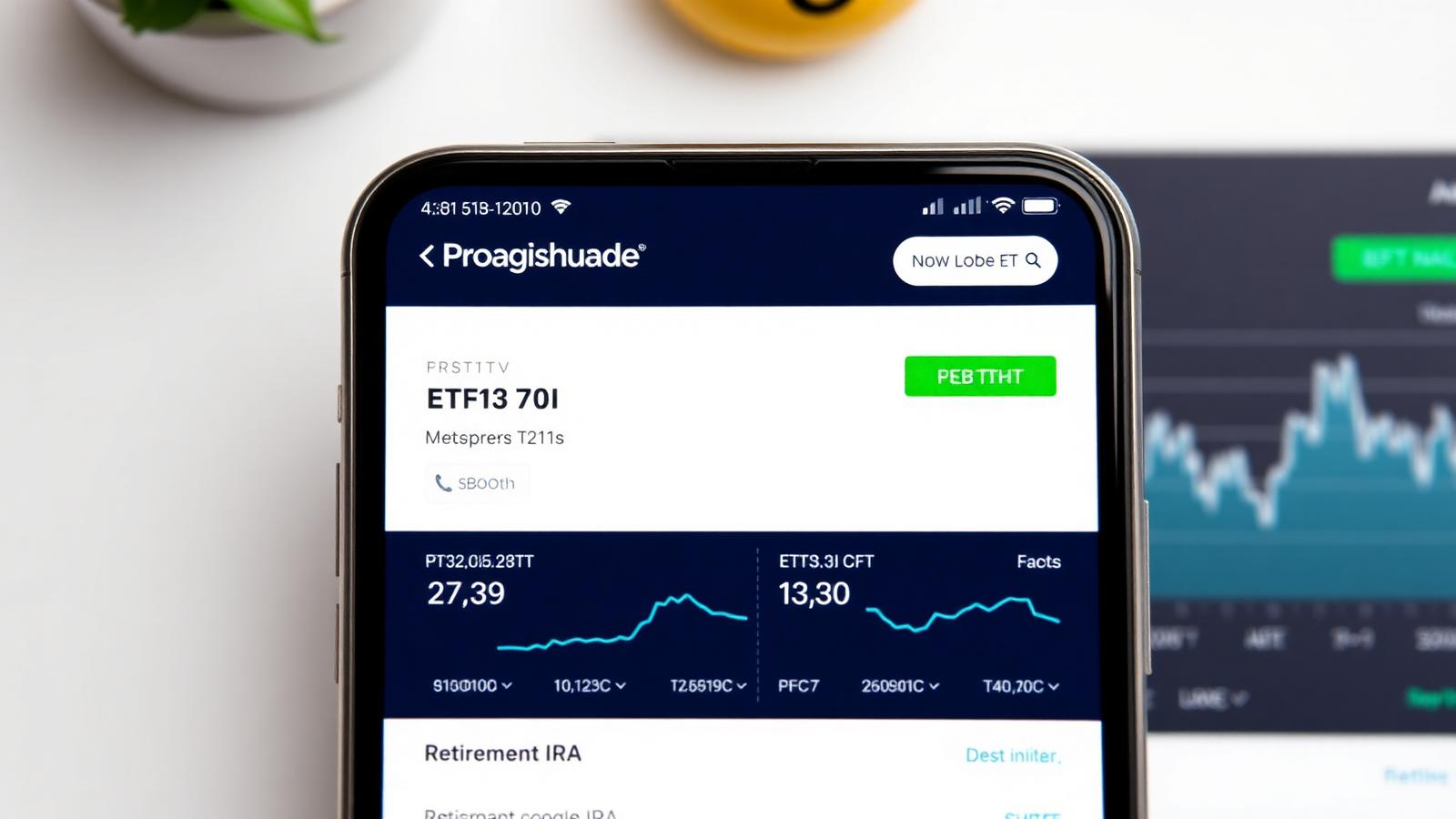
With IBIT, FBTC, and similar products available on every major brokerage platform, holding Bitcoin in a Roth IRA is now a one-click decision. The case is straightforward: if you believe Bitcoin will appreciate over decades, the Roth IRA shelter eliminates capital-gains tax on those decades of growth. A $7,000 Roth IRA contribution that compounds at even a modest 8% over 30 years becomes ~$70,000 - the absence of cap-gains tax saves $14,000+ at typical long-term rates.
The case against: concentration risk. Most financial planners recommend keeping crypto exposure to 1–5% of a diversified retirement portfolio, on the grounds that a 50%+ drawdown in a single year is normal for the asset class and would not be tolerable as a 25% portfolio allocation.
Tax implications: Bitcoin ETFs are not always treated like Bitcoin
This is a subtle but important point. Spot Bitcoin ETFs are structured as grantor trusts, which means the IRS treats them as property - like the underlying Bitcoin - for capital-gains purposes. Sales create short-term or long-term capital gains depending on holding period, identical to selling Bitcoin directly. Distributions, where they exist (rare for non-staking products), pass through with their underlying tax character.
Spot Ethereum ETFs with staking exposure introduce a complication: the staking yield is taxable as ordinary income at the time of receipt, even if held in the ETF. For Solana ETFs with staking, the same rule applies. In a Roth IRA, this is irrelevant - all gains are tax-free anyway. In a taxable account, the yield component creates an annual tax bill that pure-Bitcoin ETFs do not.
What's coming: XRP, Litecoin, and crypto basket ETFs
Three pending product categories deserve watching through 2026. First, XRP ETFs: multiple issuers filed for spot XRP funds in early 2026 following the resolution of Ripple's regulatory dispute. SEC approval is widely expected in Q3–Q4 2026. Second, basket ETFs: Bitwise, Hashdex, and Grayscale have all filed for diversified crypto-index ETFs that hold Bitcoin, Ethereum, Solana, and others in market-cap-weighted baskets. Third, leveraged and inverse products: 2x and -1x Bitcoin ETFs are now widely available through ProShares, Volatility Shares, and Direxion - useful for tactical traders, dangerous for buy-and-hold investors.
The bottom line for investors
In 2026, the question is no longer 'should I have any crypto exposure in my portfolio?' - for most diversified investors, the consensus is yes, in the 1–5% range. The question is 'how should I get that exposure?' For 80% of retail investors, the answer is now: through a spot ETF in your existing brokerage. Specifically, IBIT for Bitcoin, FETH or BlackRock's ETHA for Ethereum, and one of the four major Solana products (with staking, if you can get the tax treatment to work). The remaining 20% - those who care about self-custody, DeFi integration, international portability, or the philosophical project of holding actual cryptoasset - will continue to hold the underlying directly. Both groups are right. Both are now well-served. That, more than anything else, is what 2024–2026 actually changed.
Frequently Asked Questions
What is the best spot Bitcoin ETF to buy in 2026?
For most investors, BlackRock's IBIT is the default choice - it has the largest assets ($70B+), one of the lowest fees (0.12% after initial waiver), tightest tracking, and deepest liquidity. Fidelity's FBTC is an equally credible alternative. Avoid Grayscale's GBTC unless you have legacy tax-lot reasons to hold it; its 1.5% expense ratio is roughly 10x its peers.
Has the SEC approved a spot Solana ETF?
Yes. The SEC approved spot Solana ETFs in October 2025, making Solana the third cryptocurrency to reach that milestone after Bitcoin (January 2024) and Ethereum (July 2024). Major issuers include Bitwise, VanEck, 21Shares, and Grayscale, with cumulative inflows exceeding $900 million by early March 2026.
Can I buy Bitcoin and Ethereum ETFs through Vanguard?
Yes, as of late 2025. Vanguard reversed its earlier policy and now allows brokerage clients to buy and hold most major spot Bitcoin and Ethereum ETFs, plus selected mutual funds with crypto exposure. The change opens crypto exposure to over 50 million Vanguard clients, including significant retirement-account assets.
Should I own Bitcoin in an ETF or hold it directly?
For pure price exposure inside a traditional or retirement brokerage account, the ETF is simpler, cheaper to administer, and avoids self-custody risk. For self-custody philosophy, international transfer, DeFi integration, or use as money rather than as an investment, direct ownership is the only option. Many investors hold a small core position in self-custody and the rest through ETFs.
Can I hold a Bitcoin ETF in my IRA or 401(k)?
Yes for IRAs at every major brokerage (Fidelity, Schwab, Vanguard, Robinhood). For 401(k)s, availability depends on the plan sponsor - major recordkeepers including Fidelity, Empower, and Vanguard have begun offering Bitcoin ETF options in selected plans, with broader availability expected through 2027.
What are the tax implications of Bitcoin ETFs?
Spot Bitcoin ETFs are structured as grantor trusts, meaning the IRS treats sales as capital-gains events - short-term or long-term depending on holding period - identical to selling Bitcoin directly. Ethereum and Solana ETFs that pass through staking yield create additional ordinary-income tax events when held in taxable accounts. In a Roth IRA, all gains and yield are tax-free.
How much of my portfolio should be in crypto ETFs?
Most fee-only financial planners recommend 1–5% of a diversified portfolio for investors with a long horizon and tolerance for 50%+ annual drawdowns. Higher allocations are reasonable for younger investors with longer time horizons and explicit conviction; lower allocations or zero are reasonable for retirees and conservative investors. The asset class should be additive to a globally diversified equity-and-bond portfolio, not a replacement for it.
Sources
- UseTheBitcoin - Solana ETF Approval Status 2026 https://usethebitcoin.com/guides/solana-etf-approval/
- CoinbaseCamp - BlackRock IBIT Crosses 700K BTC https://www.coinbasecamp.com/blackrocks-bitcoin-etf-hits-700k-btc-solana-etf-update/
- SEC - Grayscale Solana Staking ETF Prospectus https://www.sec.gov/Archives/edgar/data/1896677/000119312526159173/424b3_gsol_pos_am_final.htm
- Plisio - Solana ETF Boom: Spot ETFs and SOLZ https://plisio.net/crypto/solana-etf
According to our editorial policy, every source link above was opened and checked against the claim it supports on .