AI Insurance Claims and Parametric Coverage in 2026: How Your Policy Actually Works Now
AI claims now pay in minutes. Parametric insurance pays without a claim at all. Telematics now prices ~38% of U.S. auto policies. Here is how insurance actually works in 2026 - and what your carrier isn't telling you.
When a hailstorm hit Dallas-Fort Worth in March 2026, regional insurers received approximately 47,000 home and auto claims in the first 72 hours. A decade ago, that volume would have triggered a months-long backlog: human adjusters dispatched in person, photos mailed in, paper estimates reviewed, claims approved one by one. In 2026, more than 60% of those claims were resolved in under 96 hours - most of them touched only by AI.
This is the year that AI claims automation stopped being a vendor pitch and became how insurance actually works for the average consumer. The global insurtech market is on track to reach $23.5 billion in 2026, with AI-powered claims platforms driving the largest single category of investment. For homeowners, drivers, and small-business owners, the practical implication is that the experience of filing a claim - historically the worst-rated touchpoint with insurance companies - is finally getting better.
This guide covers what AI insurance claims look like in 2026, how the new generation of platforms actually work, the parametric-insurance products that pay out automatically when triggers fire, and - critically - what your insurer is and isn't telling you about how AI is being used on your file.
How AI is changing insurance claims, end to end
A traditional auto-claim workflow circa 2018 involved up to 14 distinct human-touched steps over 14–28 days: phone intake, claim assignment, adjuster scheduling, on-site inspection, repair estimate review, approval routing, parts ordering, repair shop coordination, quality inspection, payment authorization, payment release. In 2026, the AI-augmented version of the same workflow looks like this:
- First Notice of Loss (FNOL) by phone, app, or text - handled by a conversational AI agent (Lemonade's 'Maya', Allstate's 'Amy', GEICO's 'Kate') that captures details and triages severity.
- Damage assessment via uploaded smartphone photos - computer vision models (Tractable, CCC Intelligent (claims software), Mitchell Auto) classify damage and estimate repair cost in under 90 seconds.
- Coverage verification and policy interpretation - AI parses the policy document and determines what's covered against the facts.
- Approval and payment for clear claims - under a defined dollar threshold (typically $5,000 for autos, $15,000 for homes), payment can be authorized automatically and sent in minutes via ACH or instant transfer.
- Human escalation only for complex, high-dollar, or fraud-suspect cases - the human adjuster's role shifts from transaction processing to exception handling.
Industry data for 2025–2026 from McKinsey, Capgemini, and the Insurance Information Institute consistently show that insurers using full-stack AI claims platforms resolve claims roughly 75% faster, cut claims-handling costs by 30–40%, and post NPS scores 15–25 points higher than insurers running traditional workflows.
Which carriers are actually doing this in 2026
Three groups dominate AI claims handling:
Insurtech-native carriers - Lemonade, Root, Hippo, and Branch were AI-first from inception. Lemonade has approved homeowner-claim payments in as little as three seconds; Root prices auto policies entirely on telematics-derived driving behavior; Hippo uses smart-home sensor data to underwrite and reduce claims. These carriers' customer NPS scores are generally 30–60 points above industry incumbents, but their underwriting rigor has been tested by the loss patterns of recent years.
Incumbent carriers retrofitting AI - State Farm, Allstate, Progressive, GEICO, Travelers, and Liberty Mutual have all rolled out AI claims platforms over 2023–2026, typically built on technology from third-party vendors (Tractable, Snapsheet, Cape Analytics). They lack the end-to-end design coherence of insurtechs but bring scale, capital, and decades of underwriting data.
Regional and specialty carriers - Smaller carriers and mutuals license modular AI claims tools from vendors like Guidewire ClaimCenter, Duck Creek, and Snapsheet, getting most of the benefit without rebuilding their core systems.
Parametric insurance: the product category that pays without a claim
Parametric insurance is the second AI-driven shift remaking the industry, and arguably the more radical one. Traditional indemnity insurance pays out based on actual measured loss after a multi-step claims process. Parametric insurance pays out automatically when a pre-defined trigger fires - a measured event that crosses a defined threshold - regardless of whether actual loss has yet been calculated.
Examples already in market in 2026:
- Hurricane parametric - pays a fixed amount when wind speed at a specified location exceeds a defined threshold (e.g., 100 mph sustained at the property's lat/long, measured by NOAA).
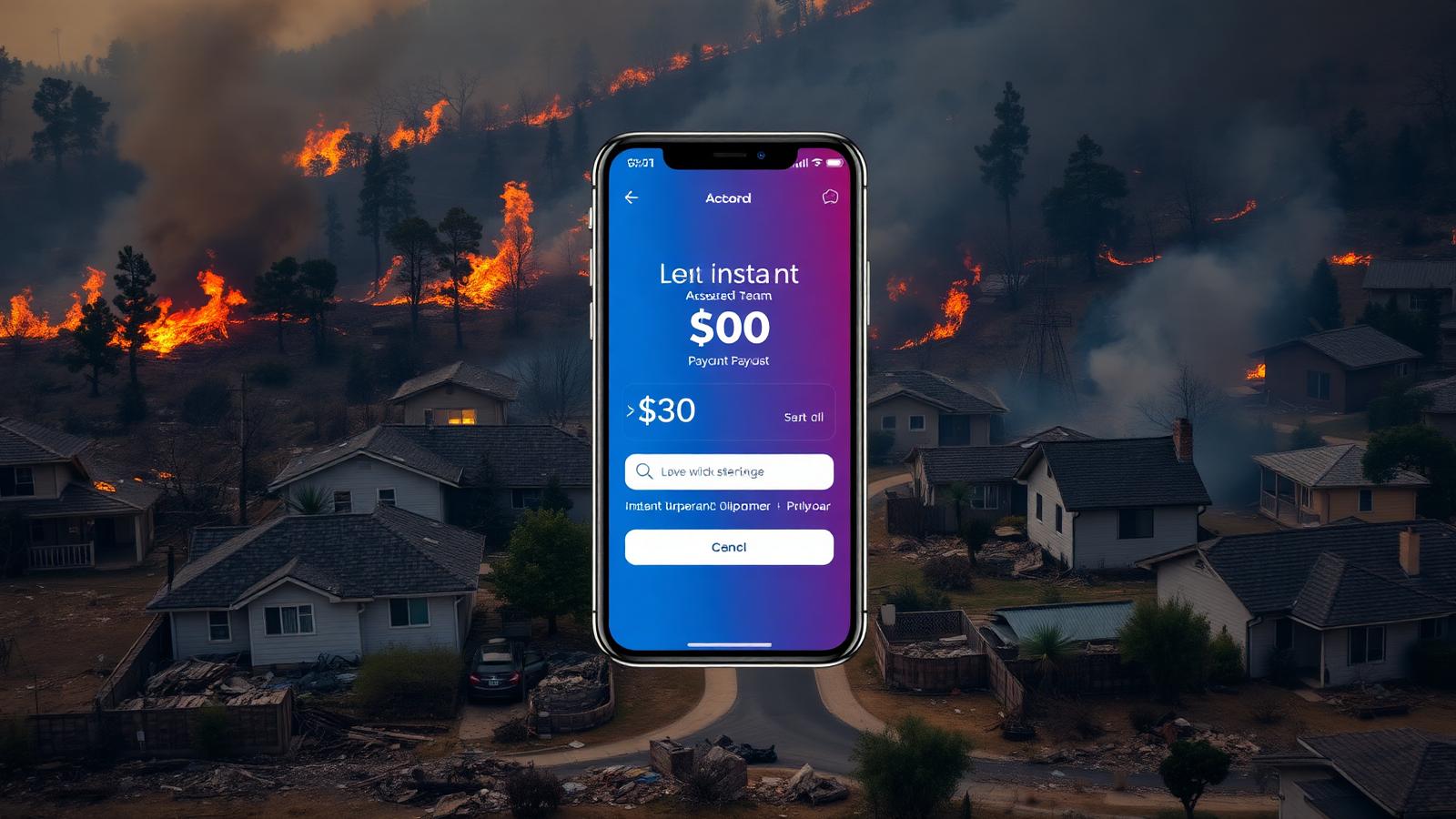
- Wildfire parametric - pays when an active fire perimeter, as published by CalFire or USFS, crosses within a defined distance of the insured property.
- Earthquake parametric - pays when USGS records a quake of defined magnitude within a defined radius.
- Travel-delay parametric - pays automatically (often within hours) when a flight is delayed beyond a defined threshold per FAA data.
- Crop parametric - pays farmers when satellite-measured rainfall, temperature, or vegetation index falls below a defined threshold.
The category's projected market size is $51.3 billion by 2034, driven by escalating climate-related disasters that are stressing the traditional indemnity model. For homeowners in wildfire and hurricane zones - particularly in California, Florida, and Louisiana, where conventional insurance carriers have pulled back coverage - parametric supplements offered by carriers like Arbol, Skyline Partners, FloodFlash, and Jumpstart are now a meaningful part of the financial-resilience toolkit.
Telematics and usage-based insurance - the auto-insurance shift
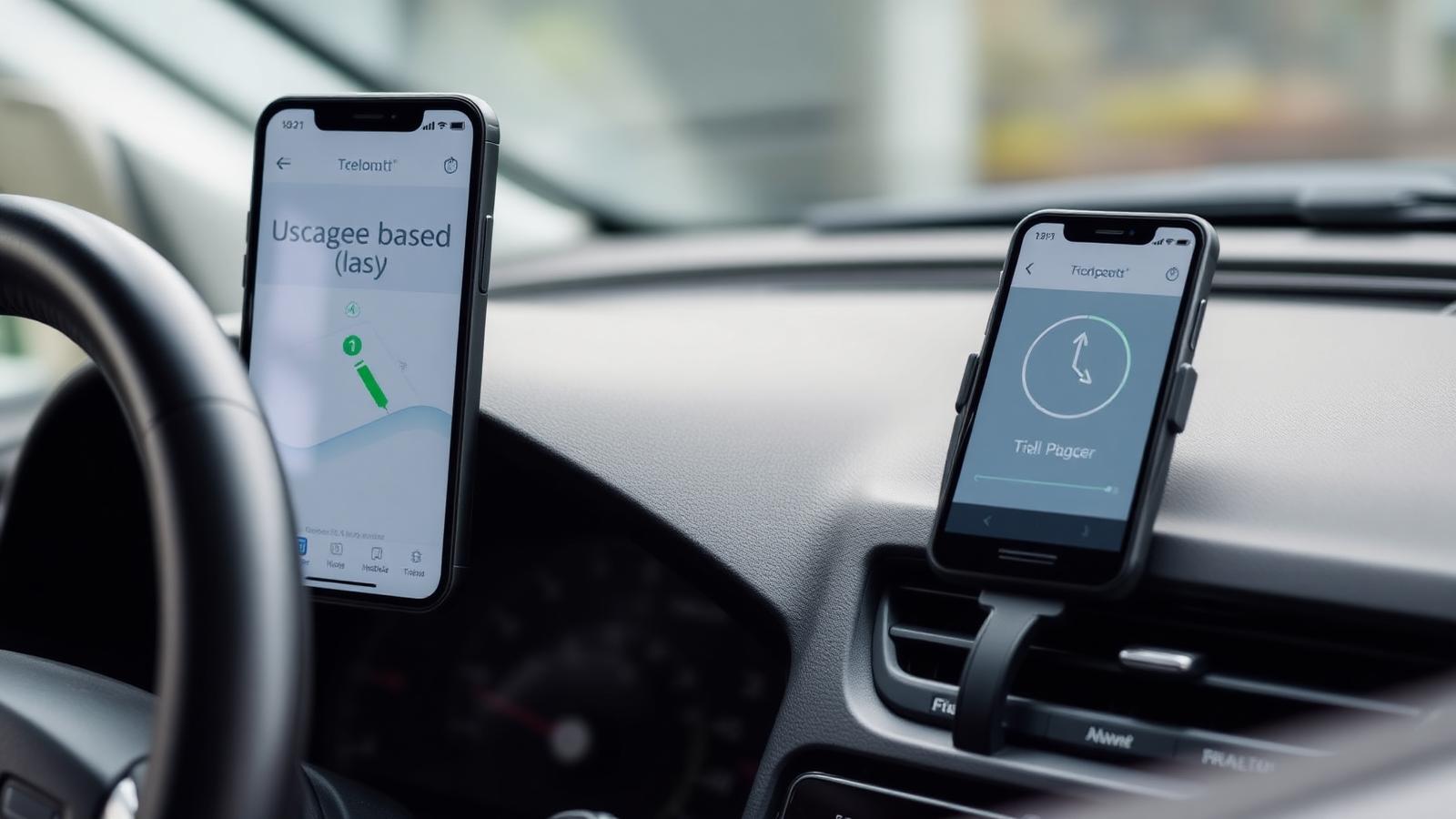
On the auto side, the AI revolution is being driven primarily by telematics: smartphone or in-vehicle device data on driving behavior, mileage, time of day, and route. Usage-based insurance (UBI) prices premiums on the actual risk a specific driver poses, rather than a demographic average.
Adoption in 2026 has crossed an inflection point. Progressive's Snapshot, State Farm's Drive Safe & Save, Allstate's Drivewise, GEICO's DriveEasy, and dozens of insurtech-native programs (Root, Metromile/Lemonade, Just) cover an estimated 38% of U.S. auto insurance policies, up from 17% in 2022. Premium reductions of 10–40% for safe drivers are typical; surcharges for risky drivers are common.
Two implications for consumers. First, if you are a safe driver and you are not enrolled in a UBI program, you are leaving money on the table - typically $200–$800 per year. Second, your phone or your car is collecting fine-grained data about when, where, and how you drive, and your insurer is using it. Read the privacy disclosures.
What your insurer isn't telling you
Three things every policyholder should understand about how AI is being used on their insurance file in 2026.
1. Your photos are training the next generation of damage models
When you upload photos of car damage or roof damage to your insurer's app, those photos - typically anonymized at the metadata level - are added to the training corpus that improves future damage-assessment models. The data-use disclosure in the app's terms makes this explicit, but few consumers read it. The trade-off is real: the AI is good because of accumulated images; your file is on average resolved faster because someone before you uploaded a similar photo.
2. AI models are auditing for fraud signals you can't see
Computer-vision models can detect digital tampering of photos with high accuracy, can correlate uploaded images with publicly visible records (e.g., social media posts, dashcam footage), and flag inconsistencies for human review. Filing a fraudulent claim in 2026 - including the 'soft fraud' of inflating a legitimate claim - is materially more likely to be detected than it was even three years ago. The U.S. insurance industry estimates AI-driven fraud detection has reduced loss leakage by 8–14% since 2022.
3. Your premium is being repriced more often than you think
Most homeowners and auto policies are formally repriced at renewal. Behind the scenes, in 2026, most major carriers run sub-renewal pricing analytics monthly or quarterly using fresh telematics, satellite imagery (for property), and external risk signals. The price you are quoted at renewal reflects a much fresher risk model than the one in place when you bought the policy.
Practical guidance for consumers in 2026
Five concrete actions, in priority order:
- If you have safe driving habits and are not enrolled in a usage-based auto program, sign up - the typical 10–25% discount more than offsets the privacy trade-off for most drivers.
- If you live in a wildfire, hurricane, or flood-prone area, look into parametric supplements alongside your traditional homeowners policy - Arbol, FloodFlash, Jumpstart, and Skyline Partners are the most retail-accessible names.
- When you file a claim, use the carrier's app and upload photos promptly. AI-assisted claims paid in <24 hours are now common; phone-and-paper claims still take 14+ days at most carriers.
- Review your policy's data-use disclosure once a year - it changes more than you think.
- Photograph your home interior and high-value items annually and store the photos in cloud backup. AI claims models perform far better when you can show the 'before' state.

Where the industry is going
Three trends to watch through 2027. First, end-to-end agentic claims - AI agents that can not only assess damage but also dispatch repair providers, order parts, schedule appointments, and pay invoices, all with one human approval. Second, embedded parametric - parametric coverage embedded into other products (mortgage, auto loan, travel booking) and triggered automatically. Third, real-time risk repricing - telematics-based premiums that update monthly rather than annually, much like utility billing.
The bottom line: insurance in 2026 is faster, cheaper, more data-driven, and - for most consumers most of the time - better. The trade-off is the loss of opacity. Your insurer knows substantially more about your behavior, your home, and your risk profile than they did even five years ago. That can work in your favor (lower premiums for safe behavior, faster payouts) or against you (premium increases driven by changes you don't notice). Knowing the rules of the new game is the only protection consumers have.
Frequently Asked Questions
How does AI handle insurance claims in 2026?
Modern AI claims platforms triage incoming claims, assess damage from uploaded photos using computer-vision models, verify coverage, and (under defined dollar thresholds) approve payment automatically - often in minutes for clear cases. Human adjusters now focus on complex, high-dollar, or fraud-suspect claims rather than routine processing. Insurers using full-stack AI report ~75% faster claim resolution and 30–40% cost reductions.
What is parametric insurance?
Parametric insurance pays out automatically when a pre-defined trigger fires - for example, when measured wind speed exceeds 100 mph at your address, or when a wildfire perimeter crosses within a defined distance. It pays a fixed amount based on the trigger event, regardless of whether actual loss has been calculated. The category is projected to reach $51.3 billion by 2034, driven by climate-related disasters.
Are AI insurance chatbots accurate?
For straightforward intake, triage, and damage assessment of common loss types, AI accuracy in 2026 matches or exceeds median human adjusters. For complex claims involving liability disputes, ambiguous coverage questions, or unusual loss patterns, human adjusters remain materially better. Most carriers route accordingly.
Should I enroll in a usage-based auto insurance program?
For safe drivers, yes - the typical 10–25% discount (sometimes up to 40%) more than offsets the privacy trade-off. For drivers with poor habits - heavy late-night driving, frequent hard braking, high mileage - UBI may result in a surcharge rather than a discount. Most programs offer a free 30–90 day trial period before pricing changes apply.
Can my insurer use AI to deny my claim?
AI can flag a claim for additional review or escalation, but most U.S. state regulations require human review for any denial decision. If you receive a denial, you have the right to request the specific reason and to appeal. State insurance departments and the National Association of Insurance Commissioners (NAIC) have issued AI fairness and transparency guidance through 2025–2026 that limits fully automated adverse decisions.
What is the best parametric insurance for a homeowner in a wildfire zone?
For California wildfire zones, the most retail-accessible parametric products as of 2026 come from Arbol, Skyline Partners, and Jumpstart - typically priced at 0.5–2% of the coverage amount per year and triggering on either fire-perimeter proximity or county-level fire-event declaration. They are a supplement to, not a replacement for, traditional homeowners insurance.
How do I file an AI-assisted insurance claim correctly?
Use the carrier's app, not the website, when possible - the apps integrate the AI photo-assessment workflow directly. Take photos in good light, at multiple angles, and include both close-up and context shots. Upload promptly while the damage is fresh. Provide accurate text descriptions when prompted. Most clear, well-documented claims under $5,000 (auto) or $15,000 (home) are approved within 24 hours.
Sources
- McKinsey - Insurance 2030 / AI Impact Reports https://www.mckinsey.com/industries/financial-services/our-insights
- Capgemini - World Insurtech Report 2025 https://www.capgemini.com/insights/research-library/world-insurtech-report/
- Insurance Information Institute - Industry Outlook https://www.iii.org/
- NAIC - AI Model Bulletin and Guidance https://content.naic.org/cmte_h_big_data_ai_wg.htm
According to our editorial policy, every source link above was opened and checked against the claim it supports on .