US-Iran Tensions in May 2026: The Investor's Playbook for Oil, Gold, Defense Stocks & Your Portfolio
US-Iran tensions are pushing Brent crude back above $90, gold within striking distance of $4,000, and defense stocks to fresh highs in early May 2026. Here is the systematic investor playbook: which assets typically win in a Middle East risk premium, how big the moves usually are, what trades have already played out, and how to protect a balanced portfolio without overreacting.
Brent crude is back above $90 per barrel. Gold is within striking distance of $4,000 per ounce. The S&P 500 Aerospace & Defense index is at a fresh all-time high. The common thread behind all three moves is the same: the renewed escalation in US-Iran tensions over the spring of 2026 is once again injecting a geopolitical risk premium into markets - and the trades that work in this environment are well-defined, well-tested, and surprisingly consistent across decades of history.
If you are trying to figure out how to position a balanced portfolio without either overreacting to headlines or pretending the risk doesn't exist, this article is the systematic playbook. We will cover what is actually driving the renewed tensions, how oil typically trades during a Mideast risk premium, what gold has historically done, which defense stocks have led every prior conflict cycle, and the specific portfolio adjustments that capture the upside without taking on outsized risk.
What's Actually Happening: The Spring 2026 Escalation in Plain English
The current escalation has its roots in the late-2025 collapse of the Iran nuclear framework that had been negotiated under the Biden and early Trump administrations. Through the spring of 2026, a series of incidents - attacks on commercial shipping in the Gulf of Oman, a strike on a US-affiliated facility in Iraq, and the deployment of a second US aircraft carrier strike group to the region - have pushed the relationship into the most dangerous period since the brief 2020 standoff.
Markets are not pricing a full-scale regional war as the base case. They are pricing roughly a 20% probability of a sustained disruption to oil flows through the Strait of Hormuz, through which roughly 20 million barrels per day - about 20% of global oil consumption - transits. Even a brief disruption to Hormuz would push Brent toward $120, which is why the current $90 print already embeds a meaningful risk premium relative to the $75 fair value the same physical fundamentals would otherwise imply.

Oil: How Big Is the Risk Premium and What Comes Next
The risk premium currently embedded in Brent is approximately $15 per barrel - the difference between the $90 spot price and the roughly $75 level implied by physical supply-demand fundamentals (OPEC+ production, US shale, demand growth in Asia). A historical comparison helps calibrate what to expect from here.
- 1990 (Iraq invasion of Kuwait): Brent rose roughly 100% in three months, then gave back half within six months
- 2003 (Iraq War): Brent rose 30% in the lead-up, then gave back most after combat operations began
- 2011 (Libya civil war): Brent rose 25% over 90 days, sustained for the rest of the year
- 2019 (Saudi Aramco strike): Brent spiked 14% in a single day, faded within two weeks
- 2020 (Soleimani strike): Brent jumped 4% intraday, fully reversed within 48 hours
- 2024 (Israel-Iran direct strikes): Brent rose 8% over two weeks, partially reversed
The pattern: oil prices respond more to actual supply disruption than to rhetorical escalation. Spikes that are not validated by real barrels coming off the market typically fade within two to six weeks. The current $15 risk premium would need either an actual Hormuz disruption or a sustained months-long campaign of strikes on regional infrastructure to be justified - otherwise, the historical pattern says it fades.
What Higher Oil Means for US Households
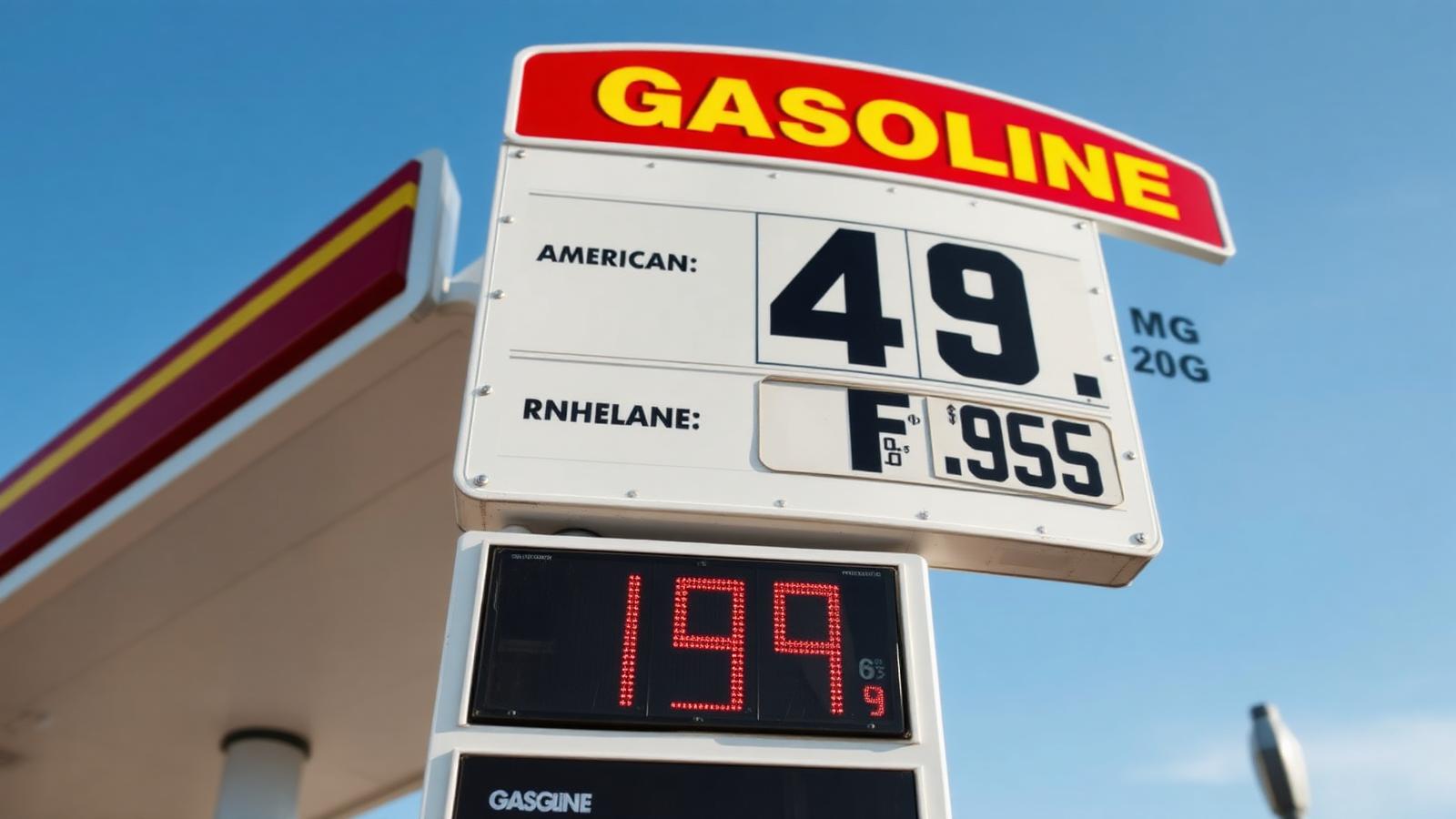
The crude-to-pump pass-through in the US is roughly 25 cents per gallon for every $10 sustained move in Brent, with a 30–45 day lag. A move from $90 to $100 sustained for 60 days would push the average US gallon to approximately $3.85–$3.95. A move to $120 would push it above $4.40. For a household driving 12,000 miles per year in a 25-mpg vehicle, every $0.50 per gallon translates to roughly $240 per year in extra fuel cost.
Gold: Why It's the Cleanest Hedge - and What History Says
Gold is currently trading near $3,950 per ounce - within striking distance of the psychologically important $4,000 level. The metal has been the single best-performing major asset of 2026, up roughly 22% year-to-date. The driver is straightforward: gold is the cleanest, oldest, and most liquid hedge against a combination of inflation risk, geopolitical risk, and central bank policy uncertainty. All three are now elevated simultaneously.
What history says about gold during Mideast escalations: in the 1990 Gulf War, gold rose 12% over three months. In 2003, it rose 8% in the run-up. In the 2024 Israel-Iran exchanges, gold rose 9% over six weeks. The pattern is consistent: gold typically captures the geopolitical premium and, unlike oil, tends to hold most of the gain even after tensions partially subside, because the underlying inflation and central bank concerns remain.
How to Get Gold Exposure
- GLD (SPDR Gold Shares) - most liquid gold ETF, $0.40 per share annual expense
- IAU (iShares Gold Trust) - slightly cheaper at 0.25% expense ratio
- Physical bullion via APMEX, JM Bullion, or Costco - for non-ETF holdings, expect 2–5% premium over spot
- Gold mining ETFs (GDX, GDXJ) - higher beta to gold price but adds operational and political risk
- Allocations of 5–10% of portfolio are well-supported by long-run portfolio research; >15% becomes a concentrated bet
Defense Stocks: The Sector That Always Leads in Conflict Cycles
The S&P 500 Aerospace & Defense index has been one of the strongest sector performers of 2026, up roughly 18% year-to-date - well ahead of the broader market. The pattern is consistent across every prior US conflict cycle: defense names lead the broad market by a wide margin during periods of elevated geopolitical risk, particularly when that risk is paired with bipartisan support for higher US defense spending (which is currently the case).
The Defense Names That Have Led the Cycle
- Lockheed Martin (LMT) - F-35 program, missile defense, prime beneficiary of any sustained Mideast operation
- Raytheon Technologies (RTX) - Patriot missile system, dominant air-defense supplier
- Northrop Grumman (NOC) - B-21 stealth bomber program, strategic deterrence
- General Dynamics (GD) - armored vehicles, naval shipbuilding for carrier strike groups
- L3Harris (LHX) - communications, electronic warfare - beneficiary of the smaller-tech defense pivot
- ITA (iShares US Aerospace & Defense ETF) - diversified single-ETF exposure to the entire sector
The Risks Specific to Defense Names
Defense stocks tend to give back gains quickly when peace negotiations progress, and they are concentrated in just a handful of mega-cap primes whose order books move on US Department of Defense procurement cycles, not directly on conflict severity. The single largest risk to the defense rally would be a credible diplomatic breakthrough - exactly the scenario gold tends to hold up better in.
Energy Stocks: Beyond Just the Crude Spot Price
Energy equities have lagged the underlying commodity move so far in 2026. The S&P 500 Energy index is up roughly 8% year-to-date - well below crude's 25%+ gain. The reason is that markets correctly recognize that the geopolitical risk premium in oil may not be sustained, while cost gearing in the majors (Exxon, Chevron, Conoco) only really kicks in if Brent stays above $85 for sustained periods.
The trade structure that has worked best for sophisticated investors in 2026 has been a barbell: long the integrated majors (XOM, CVX, COP) for sustained-price exposure with capital discipline, paired with long the high-quality oil services names (SLB, BKR) for capex recovery if any sustained $90+ environment forces new production. The riskiest trade is small-cap E&P exposure, which historically lags the majors and gives back more on any pullback.
What Doesn't Work: The Trades to Avoid
- Buying VIX calls expecting a sustained spike - VIX tends to mean-revert quickly absent broad equity decline
- Shorting the S&P 500 wholesale - broad markets historically absorb Mideast shocks within 30–60 days
- Concentrated single-name oil plays - too much idiosyncratic risk for a sector trade
- Buying long-duration bonds expecting a flight to quality - works for 1–2 weeks, then inflation reasserts
- Speculating on cryptocurrencies as a hedge - Bitcoin tends to trade as a risk asset during acute risk-off events
The Balanced Portfolio Recalibration
For a typical 60/40 (stocks/bonds) household portfolio, the appropriate response to elevated Mideast risk is not to overhaul the allocation - it is to add specific tilts that capture the upside without breaking the long-term plan. The most defensible adjustments:
- Add 3–5% gold exposure (GLD or IAU) if you do not already have it
- Tilt 2–3% of equity allocation toward defense via ITA
- Tilt 2–3% of equity allocation toward integrated energy via XLE
- Slightly underweight long-duration Treasuries (TLT) - inflation risk is real if Brent stays elevated
- Maintain or slightly raise cash to 5–8% of portfolio for opportunistic buying on any panic day
- Do not panic-sell broad equity positions - historical recoveries are quick once tensions stabilize
What Would Change the Picture
Two scenarios would force a reset of the playbook above. First, an actual sustained closure or contested transit of the Strait of Hormuz would push Brent toward $120+, gold toward $4,500, and force broad equities meaningfully lower. The hedges above would handsomely compensate but the broader portfolio would still take damage. Second - and far more likely on any 12-month horizon - a credible diplomatic breakthrough would compress the risk premium quickly: Brent toward $75, gold giving back 5–8%, defense names giving back 8–12%, and broad equities meaningfully higher. Both tails are real. The middle path - extended tensions without full disruption - is exactly the environment the current allocation is designed for.
Bottom Line
The investor playbook for elevated US-Iran tensions is well-tested across decades. Oil typically front-runs actual supply disruption and fades quickly when none materializes. Gold tends to capture and hold the geopolitical premium. Defense stocks lead the broader market through the cycle. Energy equities lag the commodity but offer better risk-adjusted exposure to a sustained price environment. The right move for most households is not a portfolio overhaul, but a measured 5–10% tilt toward gold and defense exposure, combined with the discipline to not panic-sell broad equity positions on any single bad headline. The historical evidence is clear: investors who recalibrate calmly outperform those who react emotionally to Mideast escalations.
Frequently Asked Questions
How much higher will oil go because of US-Iran tensions?
The current Brent risk premium is approximately $15 per barrel. A sustained Hormuz disruption could push prices to $120; a diplomatic breakthrough could compress them back to $75. The middle path of extended tensions without disruption keeps Brent in the $85–100 range.
Should I buy gold during US-Iran tensions?
Gold has historically been the cleanest hedge for combined geopolitical, inflation, and policy risk. A 5–10% portfolio allocation is well-supported by long-run research. Avoid >15% concentration, which becomes a directional bet rather than a hedge.
Which defense stocks benefit most from Mideast tensions?
The historical leaders are Lockheed Martin (LMT), Raytheon (RTX), Northrop Grumman (NOC), General Dynamics (GD), and L3Harris (LHX). For diversified single-ETF exposure, ITA (iShares US Aerospace & Defense) covers the entire sector.
What is the Strait of Hormuz and why does it matter?
The Strait of Hormuz is the narrow waterway between Iran and Oman through which roughly 20 million barrels of oil per day - about 20% of global oil consumption - transits. Any sustained disruption would push Brent crude toward $120+ and have outsized inflation impact globally.
What happens to stocks during a Middle East crisis?
Broad equities historically absorb Mideast shocks within 30–60 days unless the conflict escalates to direct oil-supply disruption. Defense, gold, and energy outperform; long-duration growth and unprofitable small caps tend to underperform.
Should I sell my stocks because of Iran tensions?
Historical evidence strongly says no. Investors who panic-sell during Mideast escalations tend to underperform those who recalibrate with measured tilts toward gold, defense, and energy while maintaining their core equity exposure.
Sources
- CNBC - Gold eases as inflation jitters and Iran war cloud rate outlook https://www.cnbc.com/2026/05/04/gold-eases-as-inflation-jitters-iran-war-cloud-us-rate-outlook.html
- CNBC - European markets monitor Mideast and trade tensions https://www.cnbc.com/2026/05/04/european-markets-stoxx-600-ftse-dax-cac-iran-latest-news.html
- US EIA - Strait of Hormuz Energy Transit https://www.eia.gov/international/analysis/special-topics/World_Oil_Transit_Chokepoints
According to our editorial policy, every source link above was opened and checked against the claim it supports on .