No Fed Rate Cuts in 2026: What Barclays, Goldman & Morgan Stanley Are Now Saying - and How to Position
On May 4, 2026, Barclays became the latest major brokerage to remove all Fed rate cuts from its 2026 forecast. Goldman, Morgan Stanley, and BofA pivoted weeks earlier. The consensus is now a long pause. Here is exactly how to recalibrate your mortgage, savings, credit cards, and stock portfolio for a year without easing.
On May 4, 2026, Barclays became the latest in a wave of major Wall Street brokerages to formally remove all Federal Reserve rate cuts from its 2026 forecast. Goldman Sachs pivoted three weeks earlier. Morgan Stanley followed days later. Bank of America moved its first cut from June to December. The consensus that defined household financial planning for the past 18 months - multiple Fed cuts in 2026 driving mortgages back to the 5s and credit card APRs back below 20% - has officially collapsed.
If you built any meaningful financial decision in the last year on the assumption of cheaper money in 2026 - a refinance plan, a home purchase, a debt payoff strategy, a stock portfolio allocation - this article is the systematic recalibration. We will walk through what each major bank now forecasts, what the data behind the pivot actually says, and most importantly, the eight specific moves you should make in the next 60 days to position your household for a year of no cuts.
What the Major Banks Now Forecast
Three months ago, the median Wall Street forecast for end-2026 federal funds rate was 3.00%, implying three 25 bps cuts from the current 3.50%–3.75% range. Today, the median forecast is essentially flat - most major firms see at most one cut, and several see none at all. Here is the current state of the consensus as of early May 2026:
- Barclays (May 4 update): No cuts in 2026, first cut in March 2027
- Goldman Sachs (April 14 update): One cut in December 2026 (was: three cuts)
- Morgan Stanley (April 17 update): No cuts in 2026, first cut in Q1 2027
- Bank of America (April 22 update): One cut in December 2026 (was: three cuts in 2026)
- JPMorgan: One cut in November 2026 (was: two)
- Citi: Still forecasting two cuts (the most dovish major)
- Median Fed dot plot (April SEP): One cut by year-end 2026
- Fed Funds futures market (May 4): Approximately 35% probability of any cut in 2026
Why Wall Street Pivoted: The Three Forces Behind the Hawkish Repricing
The pivot was not driven by any single shock. It was the steady accumulation of three macro forces that finally, between mid-April and early May, broke the case for cuts. Understanding each one is essential because it tells you what would have to change for the consensus to swing back the other way.
1. Sticky Core Services Inflation
Core PCE inflation - the Fed's preferred gauge - has stalled at 2.7% year-over-year for four consecutive months. The goods component is well-behaved. The problem is core services, particularly housing-adjacent services and healthcare, which have refused to cool below 3.5% annualized. Until that breaks, the Fed has very little political room to cut.
2. Energy Inflation Risk From the Middle East
Brent crude is back above $90 per barrel after the spring escalation in US-Iran tensions. Every $10 sustained move in Brent adds roughly 0.3 percentage points to year-over-year headline CPI within 60 days. The Fed cannot ignore that risk when it is debating cutting.
3. A Labor Market That Refuses to Roll Over
The April 2026 jobs report still showed payroll growth above the breakeven rate. Unemployment ticked up to 4.3% but remains well below the levels that historically force the Fed's hand. Until non-farm payrolls print below 100,000 for two consecutive months, the case for emergency easing simply doesn't exist.
How a No-Cut Year Hits Your Mortgage
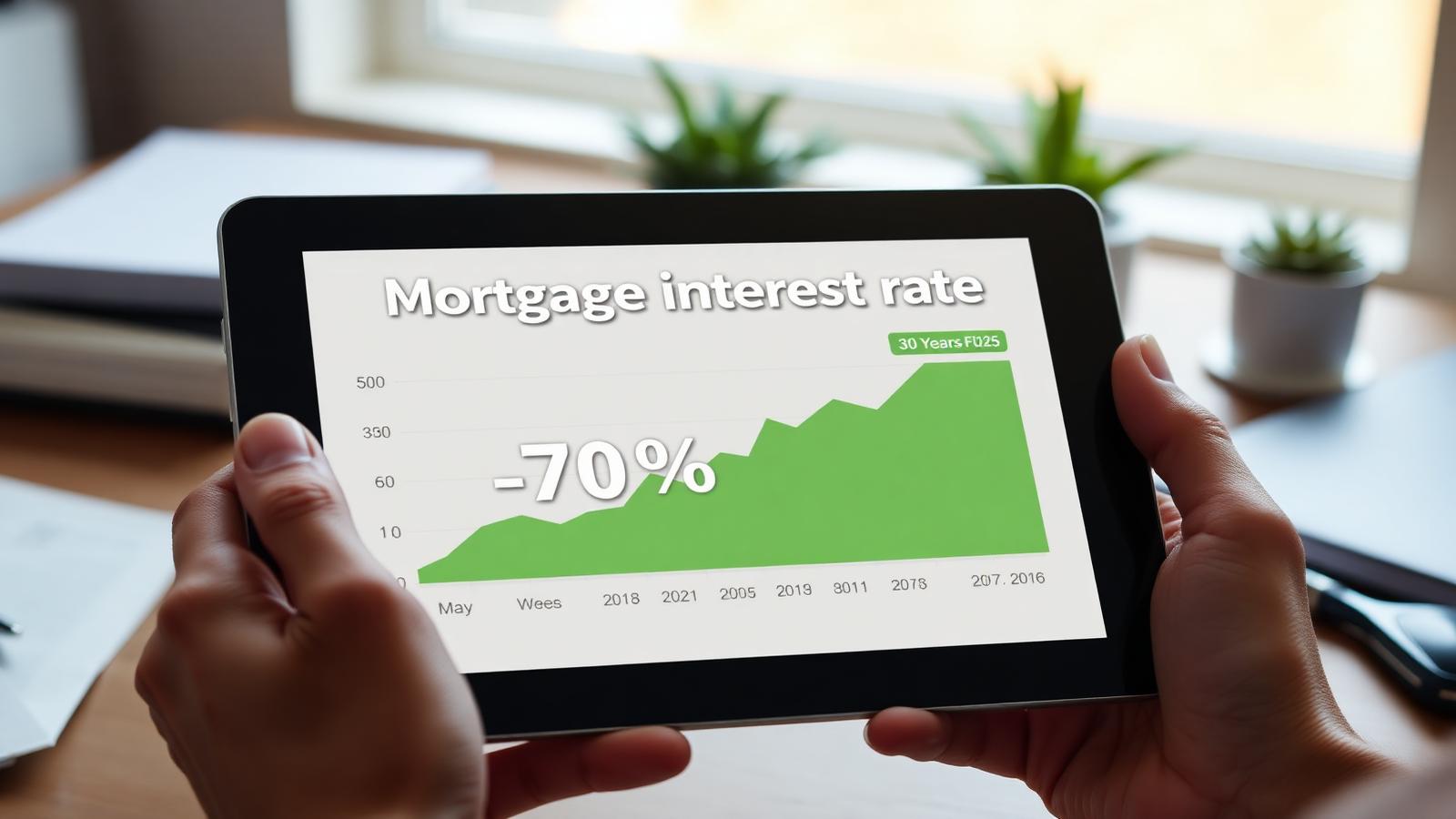
The 30-year fixed rate mortgage closely tracks the 10-year US Treasury yield plus a roughly 250 basis point spread. With the 10-year yield at 4.40% and showing no signs of breaking lower without a clear recession, the realistic range for the 30-year fixed mortgage rate for the rest of 2026 is 6.50%–7.25%.
What This Means in Real Dollars
On a $400,000, 30-year fixed mortgage, the difference between 6.5% and 7.25% is approximately $200 per month - or $72,000 over the life of the loan. The difference between today's rate and the 5.5% mortgage many were planning for is roughly $400 per month, or $144,000. If you are house-shopping in 2026, build your budget around 6.75–7.0% - not the optimistic 6% that some realtors are still quoting.
How a No-Cut Year Helps Your Savings
Top high-yield savings accounts are still paying 4.30%–4.60% APY - the best real (inflation-adjusted) yields savers have seen since the early 2000s. With the Fed now expected to hold for most of 2026, these rates are unlikely to fall meaningfully in the short term.
The Concrete Savings Strategy
- Emergency fund (3–6 months of expenses): Top HYSA - Marcus, Ally, SoFi, Wealthfront in 4.30–4.60% range
- 12-month liquidity bucket: 1-year CD at 4.50%+ from an online bank - locks in current yield
- Longer cash bucket: 24-month CD at 4.40%+ - captures yield before any eventual cut
- Tax-sensitive: 4-week to 13-week T-bills (~4.30%) - state tax exempt, ideal for high-tax states
- Avoid the 'big bank' trap: Chase, Wells, BofA still pay 0.01% on savings - that's a $4,400 per year tax on $100,000
How a No-Cut Year Crushes Credit Card Debt
Credit card APRs are anchored to the prime rate, which moves directly with the federal funds rate. With no cuts coming, the average credit card APR will stay around 24% - near a 30-year high. For households carrying revolving debt, this is the single most expensive cost of the Fed's pause.
Concrete math: a $7,000 credit card balance at 24% APR costs roughly $1,680 per year in interest if only minimum payments are made. A $15,000 balance costs $3,600. The most defensible single financial move for any household carrying credit card debt in 2026 is to aggressively prioritize paying it down - no investment opportunity in the open market is going to reliably outperform a 24% guaranteed return.
How a No-Cut Year Hits Auto Loans and HELOCs

Auto loan rates for prime borrowers are stuck around 7.5%–8.0% for new cars and 11%–12% for used. The average new car loan payment in May 2026 is $755 per month - an all-time high. If you can extend the life of your current vehicle by 24 months, you avoid roughly $18,000 in interest expense alone. HELOCs, which also track prime, will continue to cost roughly 8.5%–9.0% - making cash-out refinances and home equity loans materially less attractive than they were two years ago.
How a No-Cut Year Affects Stocks
Counterintuitively, the equity market initially cheered the hawkish pivot. The S&P 500 made a new all-time high two sessions after the April 29 Fed decision. The reason is that investors are reading the no-cut stance as a signal of economic strength rather than policy error. That is a benign read - but it is conditional on earnings continuing to deliver. The risk is a quick reversal if labor data deteriorates faster than the Fed expects.
The clear winners in a no-cut environment are: large-cap quality (companies with low debt and pricing power), financials (banks earn more on a steeper curve), energy (benefits from sticky inflation), and short-duration high-quality bonds. The clear losers are: long-duration unprofitable growth, residential REITs sensitive to mortgage demand, and highly leveraged small caps.
The 8-Move Recalibration Checklist
- 1. Move your emergency fund out of any bank paying less than 4% - today
- 2. Lock in a 12-month CD at 4.5%+ for any cash you don't need to touch
- 3. Aggressively pay down any credit card balance - the 24% APR is your highest-return investment
- 4. If you locked in a mortgage above 7.75% in 2023–2024, get one refinance quote - break-even may already be there
- 5. If you're house-hunting, build your budget around 6.75–7.0% mortgage rates, not 6%
- 6. Extend your current vehicle by 12–24 months instead of taking on a $750/month auto loan
- 7. Rebalance equity portfolio toward quality, financials, energy; trim long-duration unprofitable growth
- 8. Build a checklist of triggers that would change the picture: <100K NFP, <2.5% core PCE, sub-$80 Brent
What Would Make Wall Street Pivot Back
The consensus has pivoted hawkish - but it can pivot back just as quickly. The three triggers most strategists are watching: a non-farm payrolls print below 100,000 for two consecutive months, a clean break in core PCE inflation back below 2.5%, or a sustained drop in Brent crude back below $80. Any one of those would put a September 2026 cut back on the table within weeks. Two of three would put the dovish 2026 trade back in play.
Bottom Line
The Wall Street pivot to no-cuts-in-2026 is real, it is widespread, and it is grounded in genuine data. Households that adjust their financial planning to assume a long pause - rather than waiting for cheap money to bail them out - will end the year in materially better shape than households that don't. The work is not glamorous: move your savings, pay down your cards, recalibrate your mortgage budget, extend your car. Each move is small. Together they are the difference between getting paid by the Fed's pause and getting punished by it.
Frequently Asked Questions
Will the Fed cut rates in 2026?
Probably not, or at most once. As of early May 2026, Barclays sees no cuts, Goldman and BofA see one cut in December, and Fed Funds futures imply a 35% probability of any cut for the year. The April Fed dot plot median is just one cut.
What is the mortgage rate forecast for 2026?
The realistic 30-year fixed range for the rest of 2026 is 6.50–7.25%. Sustained rates below 6.5% would require a clear recession signal - which is not currently in the data.
Should I refinance my mortgage in 2026?
Refinance math only works for borrowers locked in above approximately 7.75%, assuming standard closing costs. For everyone else, especially the millions with sub-4% pandemic-era mortgages, staying put remains the right move.
What are the best high-yield savings rates in May 2026?
Top online HYSAs are paying 4.30–4.60% APY (Marcus, Ally, SoFi, Wealthfront). 1-year CDs are paying 4.50%+. 4-week T-bills are yielding around 4.30% and are state-tax exempt.
How does no Fed cuts affect credit card APRs?
Credit card APRs stay near 24% - a 30-year high. A $7,000 balance costs roughly $1,680 per year in interest at minimum payments. Aggressively paying down credit card debt is the highest-return financial move available to most households.
What would change the no-cuts forecast?
Three triggers: non-farm payrolls below 100K for two consecutive months, core PCE breaking back below 2.5%, or Brent crude sustained below $80. Any one revives the cut case; two would put the 2026 dovish trade back in play.
Sources
- Reuters - Barclays bets on no Fed rate cuts in 2026 https://www.reuters.com/business/barclays-becomes-latest-brokerage-bet-no-fed-rate-cuts-2026-2026-05-04/
- CNBC - Treasury yields rise as traders monitor data and Mideast https://www.cnbc.com/2026/05/04/treasury-yields-rise-as-traders-monitor-factory-data-and-mideast-moves.html
- Federal Reserve - April 2026 Summary of Economic Projections https://www.federalreserve.gov/monetarypolicy/fomcprojtabl20260429.htm
According to our editorial policy, every source link above was opened and checked against the claim it supports on .