Medicare Advantage vs Original Medicare 2026: Complete Enrollment Decision Guide
About 4 million Americans turn 65 every year and face the single most consequential Medicare decision: Original Medicare with Medigap and Part D, or Medicare Advantage. This is the complete 2026 US guide - real premiums, the new $2,000 Part D cap, enrollment periods, IRMAA surcharges, and a decision framework that fits your health and budget.

Every year, about 4 million Americans turn 65 and become eligible for Medicare. The single most consequential coverage decision they will make is not which plan to buy - it is whether to enroll in Original Medicare (Parts A and B, plus a Medigap supplement and a standalone Part D drug plan) or Medicare Advantage (Part C, which bundles A, B, and usually D into a single private plan from insurers like UnitedHealthcare, Humana, Aetna, or Kaiser Permanente). For 2026, roughly 34 million Americans are enrolled in Medicare Advantage - the highest share ever - while 32 million remain in Original Medicare. The 'right' answer depends on your health, your finances, where you live, and how you feel about network restrictions.
This is the definitive US guide to Medicare Advantage vs Original Medicare for the 2026 plan year: what Part A, B, C, and D actually cover, the real 2026 premiums and out-of-pocket maximums, how the Inflation Reduction Act's $2,000 Part D cap works, the enrollment periods you cannot miss, and a decision framework that answers the question 99% of new enrollees are actually asking - 'which one is right for me?'

Medicare Parts A, B, C, and D Explained
Medicare is not a single program - it is four related programs administered by the federal Centers for Medicare & Medicaid Services (CMS). Understanding the four parts is the foundation of every subsequent decision.
Part A: Hospital Insurance
Covers inpatient hospital stays, skilled nursing facility care after a qualifying hospital stay, hospice care, and some home health services. For 2026, most Americans get Part A premium-free because they (or a spouse) paid Medicare payroll taxes for at least 40 quarters. The 2026 Part A inpatient hospital deductible is $1,676 per benefit period. Days 1-60 in the hospital have no additional coinsurance; days 61-90 carry a $419/day coinsurance; days 91+ carry $838/day using 'lifetime reserve days.'
Part B: Medical Insurance
Covers doctor visits, outpatient services, preventive care, durable medical equipment, and some home health. The 2026 standard Part B premium is $185.00/month, up from $174.70 in 2025. Higher-income beneficiaries pay Income Related Monthly Adjustment Amount (IRMAA) surcharges - a single filer with 2024 MAGI above $103,000 pays higher premiums, up to $628.90/month at the top IRMAA bracket. The 2026 Part B deductible is $257, after which Medicare pays 80% of approved services and you pay 20% coinsurance with no annual out-of-pocket maximum.
Part C: Medicare Advantage
Private-insurer alternative to Original Medicare. You still pay the Part B premium ($185/month in 2026), plus any additional MA plan premium (often $0). The plan replaces Part A and B, usually includes Part D drug coverage, and typically adds dental, vision, hearing, and gym benefits (SilverSneakers) that Original Medicare does not cover. Networks are usually HMO or PPO and much narrower than Original Medicare. Prior authorization requirements are what you will notice first in daily use.
Part D: Prescription Drug Coverage
Standalone prescription drug plan sold by private insurers. The 2026 national average Part D premium is roughly $46.50/month. The single biggest 2026 change is the $2,000 annual out-of-pocket cap on drug costs mandated by the Inflation Reduction Act - a genuinely major protection for beneficiaries on expensive medications. Before this cap took effect in 2025, catastrophic-tier coinsurance could run into tens of thousands of dollars per year.

Medicare Advantage vs Original Medicare: The Real Trade-offs
Cost predictability
Medicare Advantage wins on predictability. Every MA plan is required by CMS to have an annual out-of-pocket maximum (the 2026 cap is $9,350 in-network and $14,000 combined in/out-of-network for PPOs). Original Medicare, by contrast, has NO annual out-of-pocket maximum for Part A or Part B - which is precisely why most Original Medicare enrollees also buy a Medigap policy to fill that gap. If you compare Original Medicare + Medigap Plan G + standalone Part D against a $0-premium Medicare Advantage plan, the MA plan is usually cheaper monthly but exposes you to more variable out-of-pocket costs if you actually get sick.
Network flexibility
Original Medicare wins on network flexibility. It is accepted by virtually every doctor, hospital, and specialist in the United States that treats Medicare patients. There is no network - if the provider accepts Medicare assignment, you can see them, period. Medicare Advantage plans use HMO or PPO networks that vary dramatically by county. If you travel frequently, live in more than one state during the year, want a specific renowned specialist (Mayo Clinic, Cleveland Clinic, MD Anderson), or have adult children in another state you may need to see doctors near, Original Medicare's flexibility is often decisive.
Extra benefits
Medicare Advantage wins on extra benefits. Most MA plans include dental cleanings, eyeglasses, hearing aids, gym memberships (SilverSneakers), over-the-counter (OTC) allowances of $50-$150 per quarter, transportation to medical appointments, and sometimes even grocery allowances for chronic-disease enrollees. Original Medicare covers essentially none of this. If you would otherwise pay $2,000-$4,000/year out of pocket for dental and vision, a $0-premium MA plan can be a genuine financial win.
Prior authorization
Original Medicare wins on prior authorization - it has almost none. Medicare Advantage plans require prior authorization for a substantial share of high-cost services (MRIs, CTs, surgery, physical therapy beyond a few visits, skilled nursing facility admission). Roughly 46 million prior authorization requests were submitted to MA plans in 2023, with a denial rate that varies significantly by insurer. If you have a complex medical condition, prior authorization delays can be genuinely dangerous.

Medigap: The Insurance That Fills Original Medicare's Gaps
If you choose Original Medicare, you should almost certainly also buy a Medigap policy (also called Medicare Supplement Insurance). Medigap plans are standardized across states - Plan G is by far the most popular in 2026 because it covers everything the newer Plan F used to cover (which is no longer available to new Medicare enrollees) except the Part B deductible. The average Plan G premium ranges from about $110 to $250 per month depending on your age, gender, tobacco use, ZIP code, and insurer.
The single most important thing to know about Medigap is that guaranteed-issue rights (the right to buy a Medigap policy without medical underwriting) exist only during your Medigap Open Enrollment Period - the six months starting the first month you are both 65+ and enrolled in Part B. If you sign up for Medicare Advantage at 65 and try to switch to Original Medicare + Medigap at 68, most states allow insurers to medically underwrite you - and if you have any significant health condition, you may be denied Medigap or charged dramatically more. Only Connecticut, Massachusetts, Maine, and New York offer year-round guaranteed-issue rights. This restriction is the reason the initial Medicare enrollment decision is so consequential.
2026 Enrollment Periods You Cannot Miss
- Initial Enrollment Period (IEP) - 7 months centered on the month you turn 65. Miss it and you may pay lifetime Part B late-enrollment penalties (10% per year of delay)
- General Enrollment Period (GEP) - January 1 to March 31 each year, for people who missed their IEP. Coverage begins the month after enrollment
- Annual Enrollment Period (AEP) / Open Enrollment - October 15 to December 7 each year. This is when you can switch between Original Medicare and Medicare Advantage, add/change Part D plans, and change MA plans. Changes take effect January 1
- Medicare Advantage Open Enrollment Period (OEP) - January 1 to March 31. You can switch from one MA plan to another, or drop MA and return to Original Medicare (and pick up a Part D plan)
- Special Enrollment Periods (SEP) - triggered by life events like moving out of a plan's service area, losing employer coverage, or qualifying for Extra Help
The 2026 Part D $2,000 Out-of-Pocket Cap
The single most important recent change to Medicare is the $2,000 annual out-of-pocket cap on Part D prescription drug costs, which took full effect in 2025 under the Inflation Reduction Act. Once your annual out-of-pocket drug spending hits $2,000, Part D pays 100% of the cost of your covered drugs for the rest of the year - no more catastrophic-tier coinsurance, no more $10,000+ annual bills for insulin, cancer drugs, or biologics. For beneficiaries on expensive specialty medications, this is genuinely life-changing protection.
Every Medicare beneficiary, whether on Original Medicare with a standalone Part D plan or on a Medicare Advantage plan that includes drug coverage, gets this $2,000 cap. Also new in 2026: the Medicare Prescription Payment Plan (M3P) lets you spread the $2,000 across the calendar year as monthly installments rather than paying it upfront - useful if you fill an expensive prescription in January that would otherwise blow through your out-of-pocket cap in a single month.
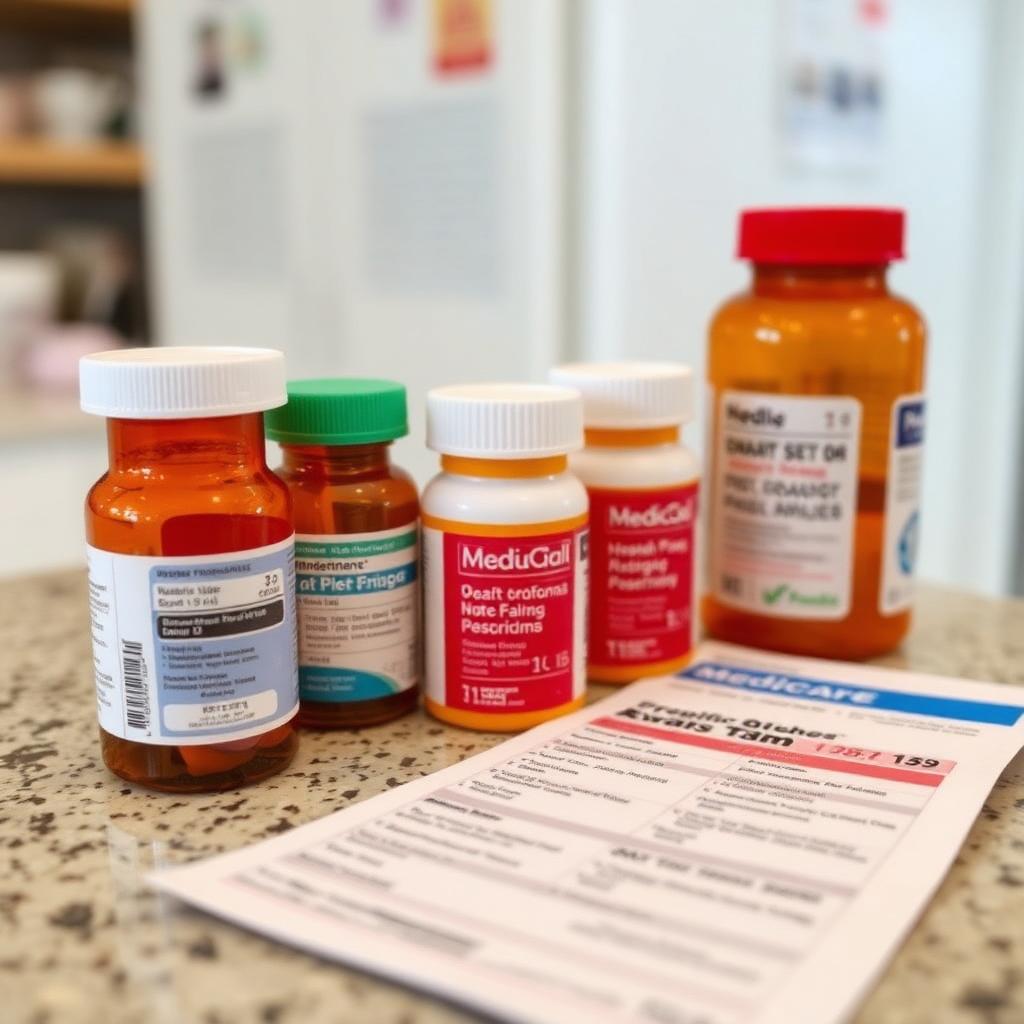
IRMAA: The Premium Surcharge for Higher Earners
Medicare premiums are not the same for everyone. The Income Related Monthly Adjustment Amount (IRMAA) applies to both Part B and Part D and is calculated on your modified adjusted gross income from two years ago. For 2026 premiums, CMS looks at your 2024 tax return. The single-filer IRMAA thresholds for 2026 are approximately: $103K first bracket, $129K, $161K, $193K, and $500K+ at the top. A single retiree with $250,000 of investment income pays roughly $500/month in combined Part B and Part D IRMAA on top of the standard premiums.
IRMAA is one of the strongest arguments for tax diversification in retirement - drawing from a Roth IRA (which does not count toward MAGI) rather than a Traditional IRA can meaningfully reduce Medicare premiums. This is one reason the Roth conversion ladder discussed in our Roth IRA vs 401(k) guide has such durable value for early retirees planning ahead.
A Simple Decision Framework
Choose Original Medicare + Medigap + Part D if:
- You have (or expect to develop) a complex or serious medical condition
- You travel often, live seasonally in a second home, or spend time with family in multiple states
- You value being able to see any specialist without prior authorization
- You are willing to pay $110-$250/month for Medigap in exchange for very low variable out-of-pocket costs
- You want a Cadillac Escalade of Medicare - highest cost, highest flexibility, lowest surprises
Choose Medicare Advantage if:
- You are generally healthy, use one or two local doctors, and value low monthly cost
- You want bundled dental, vision, hearing, and gym benefits that Original Medicare does not cover
- You are comfortable with a defined network and are willing to accept prior authorization
- You want a single insurance card and a coordinated care model
- You cannot afford Medigap premiums and want the built-in out-of-pocket maximum for cost protection
How to Enroll: Step-by-Step
- Three months before your 65th birthday, go to SSA.gov/Medicare and start the enrollment process (allow 4-6 weeks for approval)
- If you receive Social Security benefits, you are auto-enrolled in Parts A and B - your card arrives in the mail
- If you are still working with employer coverage, you may be able to defer Part B without penalty (verify with HR that your coverage is creditable)
- Use the official Medicare Plan Finder at Medicare.gov/plan-compare to compare MA and Part D plans available in your ZIP code
- For Medigap, use your state insurance department's rate comparison tool and get quotes from at least three carriers (rates for the same standardized plan vary dramatically by insurer)
- Consider working with a State Health Insurance Assistance Program (SHIP) counselor - free, unbiased, one-on-one Medicare counseling in every state
Bottom Line
There is no universally correct answer to Medicare Advantage vs Original Medicare - the right choice depends on your specific health status, budget, geographic mobility, and tolerance for network restrictions. What is universally true: the initial enrollment decision has long-term consequences because of Medigap underwriting restrictions in most states, and the 2026 changes to Part D make prescription drug coverage more forgiving than at any time in Medicare's history.
Take your enrollment seriously. Use the free official tools (Medicare Plan Finder, SHIP counselors), read the Evidence of Coverage document for any plan you are considering, and check that your specific doctors and prescriptions are covered before you enroll. And revisit your choice every October during Open Enrollment - your health, your medications, and the plans available in your area all change, and staying on the same MA plan by default for a decade is rarely optimal.
Frequently Asked Questions
When can I enroll in Medicare?
Your Initial Enrollment Period is 7 months centered on the month you turn 65. Miss it and you may pay lifetime Part B late-enrollment penalties. Annual Open Enrollment runs October 15 to December 7 each year for switching plans; the Medicare Advantage Open Enrollment Period is January 1 to March 31.
What does Medicare Part D cover in 2026?
Part D covers outpatient prescription drugs through private plans. The single biggest 2026 feature is the $2,000 annual out-of-pocket cap mandated by the Inflation Reduction Act - once your out-of-pocket drug costs hit $2,000, Part D pays 100% of covered drugs for the rest of the year.
Can I switch back to Original Medicare from Medicare Advantage?
You can switch during Annual Open Enrollment (Oct 15-Dec 7) or the MA Open Enrollment Period (Jan 1-Mar 31). But if you want to add a Medigap policy after switching back, most states allow insurers to medically underwrite you - meaning you can be denied or charged more if you have health conditions.
Do I need Medigap with Medicare Advantage?
No - Medigap policies do not work with Medicare Advantage plans and it is actually illegal for a Medigap insurer to sell you a policy while you are enrolled in Medicare Advantage. Medicare Advantage plans include their own annual out-of-pocket maximum for financial protection.
How much does Medicare cost in 2026?
Standard Part B premium is $185.00/month (higher with IRMAA surcharges). Part A is premium-free for most beneficiaries. Medigap Plan G ranges from $110-$250/month. Standalone Part D averages ~$46.50/month. Many Medicare Advantage plans have $0 additional premium beyond Part B.
What is IRMAA and how does it affect my Medicare premium?
IRMAA (Income Related Monthly Adjustment Amount) is a surcharge on Part B and Part D premiums for higher-income beneficiaries, calculated on your MAGI from two years prior. Single filers with 2024 MAGI above $103,000 pay increased premiums in 2026, ranging up to $628.90/month for Part B at the top bracket.
Sources
- Medicare.gov - Official Plan Finder https://www.medicare.gov/plan-compare/
- Centers for Medicare & Medicaid Services (CMS) https://www.cms.gov/
- Social Security Administration Medicare Enrollment https://www.ssa.gov/medicare/
- State Health Insurance Assistance Program (SHIP) https://www.shiphelp.org/
According to our editorial policy, every source link above was opened and checked against the claim it supports on .