Kevin Warsh Confirmed As Fed Chair: What Powell Staying On The Board Actually Means For Your Money
The Senate has confirmed Kevin Warsh as the next Federal Reserve chair, but Jerome Powell is staying on as a governor - the first dual-chair Fed since the institution's founding. Markets, mortgage shoppers and savers are now scrambling to figure out what a Warsh-led FOMC actually does next, how the unusual Powell-on-the-board setup affects rate-cut odds, and what to do with your savings, mortgage lock and equity portfolio between now and the September FOMC.
On May 5, 2026, the Senate Banking Committee voted to confirm Kevin Warsh as the next chair of the Federal Reserve, ending months of speculation over who would succeed Jerome Powell after his term expired. In a development almost no Fed historian saw coming, Powell himself announced he will not resign from the Board of Governors when his chairmanship ends - meaning that for the first time in the Fed's 113-year history, a former chair will sit alongside his successor on the same Federal Open Market Committee. The implications for interest rates, the dollar, mortgages, equities and your savings account are bigger than the average news cycle has captured.
This article walks through exactly who Warsh is, what his actual policy views are (separating signal from headline), why Powell staying on the board matters more than most analysts initially flagged, what the rate path now looks like through the September FOMC and into 2027, and the specific moves households should consider in mortgages, savings and equity allocation between now and the next set of policy meetings.
Who Is Kevin Warsh? The Background That Actually Matters
Kevin Warsh is not a new face at the Federal Reserve. He served as a Fed governor from 2006 to 2011 - meaning he was on the Board through the entire 2008 financial crisis, the bank rescues, and the launch of the first round of quantitative easing. He was the youngest governor in Fed history when appointed at age 35, and he resigned in early 2011 over what he publicly described as discomfort with the open-ended nature of QE2.
Since leaving the Fed, Warsh has been a Distinguished Visiting Fellow at the Hoover Institution at Stanford, has served on multiple corporate and policy boards, and has been one of the most consistent and articulate critics of the post-2008 expansion of the Fed's balance sheet. His public writing through the 2010s and 2020s has emphasized three themes that now matter enormously: the Fed should not be in the business of allocating credit through massive bond purchases; the inflation of 2021-2024 was largely a monetary policy failure rather than a supply-side accident; and the Fed should normalize its balance sheet aggressively.
The Powell-Stays-On-Board Twist Nobody Saw Coming
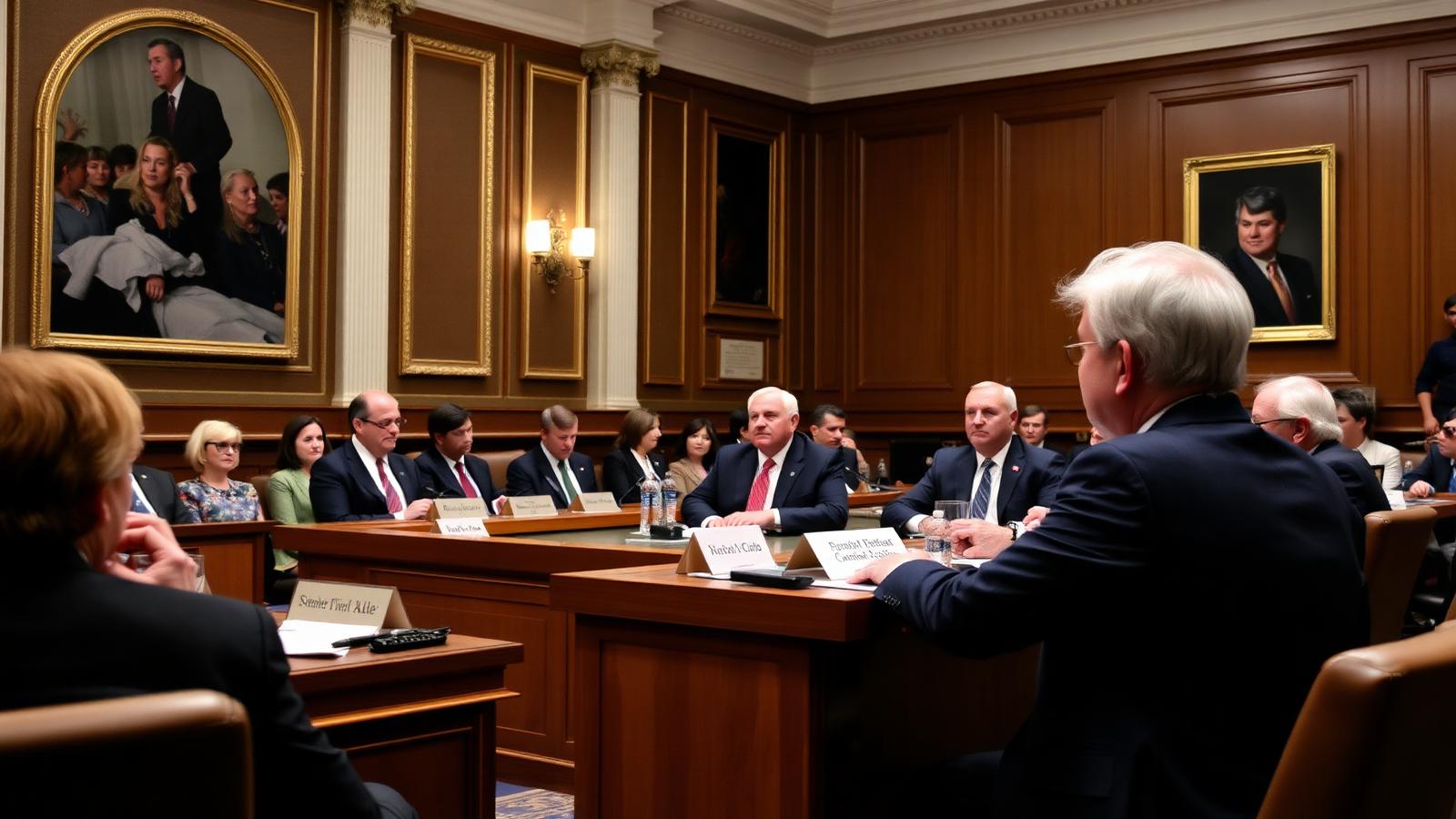
On the same day Warsh's confirmation advanced, Jerome Powell shocked Fed watchers by formally announcing that he will not vacate his Board of Governors seat when his chairmanship ends. His current term as a governor does not expire until January 2028, and he is legally entitled to remain in that role even after stepping down as chair. Two prior Fed chairs (Marriner Eccles and Alan Greenspan) considered staying as governors after their chairmanships but ultimately resigned. Powell is breaking that precedent.
Why this matters: a sitting chair leads the FOMC, sets the press conference framing, controls the staff economic projections, and largely sets the agenda. But every voting member of the FOMC has equal weight in the final policy vote. Powell remaining on the Board means Warsh now leads a committee that includes his predecessor - someone with deep institutional credibility, a long track record of dovish-leaning policy, and the historical authority to publicly dissent in a way that would force markets to pay attention.
The most likely interpretation: Powell is providing what some former Fed officials have described as a 'safety rail' - staying in position to publicly push back if he believes his successor is moving too far, too fast on either rate cuts or balance sheet reduction. The bond market has priced this twist as marginally hawkish in net effect (the 10-year yield rose 4 basis points on the day of the announcement), because Powell's continued presence anchors expectations that radical policy shifts will face institutional resistance.
What Warsh Actually Believes About Interest Rates Right Now
Warsh's confirmation hearing testimony and his public commentary through 2025 and early 2026 paint a fairly specific picture of his current policy framework. The mistake most market commentary has made is to label him simply 'hawkish' or 'dovish' - his framework is more nuanced and worth understanding precisely because it will drive the actual policy path.
Warsh's Four Core Policy Views
- On rates: he believes the current 4.25-4.50% federal funds range is roughly at the neutral rate and not particularly restrictive - implying limited room to cut without re-igniting inflation
- On the balance sheet: he wants to accelerate the runoff substantially and has floated the idea of an outright sale of long-duration Treasuries from the Fed's portfolio
- On Fed independence: in his most controversial recent comments, he described Fed independence as being 'at its peak' on monetary policy but 'much lower' on regulatory and supervisory matters - wording that several former Fed officials have described as concerning if taken to its logical extremes
- On the inflation target: he has not openly proposed changing the 2% target, but has emphasized that the Fed must not declare victory until inflation is durably at target on a multi-quarter trailing basis
The net effect: the median bond market expectation has shifted from roughly 50 basis points of cuts in the second half of 2026 to roughly 25 basis points. The probability of a September rate cut, which was 65% before the confirmation, is now priced at 38% according to CME FedWatch as of May 5.
The 'Treasury-Fed Accord' Idea That Has Wall Street Worried
One specific element of Warsh's recent commentary has generated outsized concern in fixed-income circles. He has repeatedly floated the idea of a modern equivalent of the 1951 Treasury-Fed Accord - a coordinated agreement between the Fed and Treasury Department on the size, composition, and financing strategy of the federal debt.
Critics, including several former Fed officials interviewed by CNBC and the FT in early May, have argued that any such arrangement risks subordinating monetary policy to fiscal policy goals - exactly the kind of central bank capture that has historically preceded loss of inflation control in emerging markets and, in the postwar US, contributed to the inflation of the 1970s. Supporters argue that the current structure of US debt issuance has become dysfunctional and that some coordination is overdue.
What it means in practice: if Warsh moves quickly on a Treasury-Fed accord proposal, expect a meaningful rise in the term premium on long-dated Treasuries (the 10-year and 30-year yields). If he focuses first on monetary policy and balance sheet runoff, the rate impact will be more modest. The bond market is currently pricing the 'monetary first' scenario with roughly 70% probability.

What This Means For Mortgage Rates Right Now
Mortgage rates are anchored to the 10-year Treasury yield plus a spread (currently about 250 basis points). The 10-year is now at 4.42%, putting the average 30-year fixed mortgage at approximately 6.92%. The Warsh transition has three plausible mortgage rate paths over the next 12 months:
- Base case (60% probability): 10-year stays in a 4.20-4.60% range; 30-year mortgages stay between 6.70% and 7.10%
- Bull case for borrowers (25%): inflation cooperates, Warsh cuts modestly in late 2026; 10-year drifts to 4.00%; 30-year mortgages reach 6.50%
- Bear case (15%): Treasury-Fed accord concerns push term premium higher; 10-year reaches 4.80%; 30-year mortgages push to 7.30-7.50%
Practical implication: if you have a rate lock decision in front of you and you can lock at 6.85% or below today, the math favors locking. The probability-weighted expected mortgage rate over the next 12 months is roughly 6.95%, meaning today's lock is essentially neutral with significant downside protection against the bear case.
What This Means For The Stock Market
Equity market reaction in the 24 hours after the confirmation has been notably calm - the S&P 500 closed essentially flat, the NASDAQ down 0.3%, and the Russell 2000 down 0.6%. This is a meaningful tell: markets are not pricing the Warsh transition as a near-term equity threat. The asymmetry favors quality (large-cap, profitable, low-debt) and disadvantages speculative growth (unprofitable tech, small-cap with floating-rate debt).
The Equity Tilts That Make Sense Now
- Slight overweight to financials (XLF) - banks benefit from a higher-for-longer yield environment with curve steepening
- Slight overweight to dividend equity (SCHD, VYM) - yield-anchored equity holds up better when long rates rise
- Maintain underweight to long-duration unprofitable tech - these are the most rate-sensitive names
- Modest tilt to gold (GLD, IAU) at 5-7% - uncertainty about Fed independence historically benefits gold
- Avoid overreacting in either direction - the actual policy path will be data-dependent through the September FOMC
What This Means For Savers
For households with cash savings, the Warsh transition is unambiguously positive in the short term. The probability of fewer rate cuts than previously expected means high-yield savings account (HYSA) rates and CD yields are likely to stay elevated for longer than markets had been pricing.
- Top-tier HYSAs (Marcus, Ally, Wealthfront, Apple Card Savings) currently pay 4.40-4.85% APY - likely to stay above 4% through year-end 2026
- 12-month CDs at top issuers pay 4.50-5.00% - locking now is attractive if you have a defined cash horizon
- Treasury bills (4-, 8-, 13-, 17-week) yield 4.30-4.45% with state tax exemption - the best risk-free option for households in high-tax states
- Money market funds (VMFXX, SPAXX, SWVXX) yield 4.30-4.50% with daily liquidity - the right vehicle for emergency funds
The Calendar That Actually Matters: Next 6 Months
Three dates dominate the near-term Fed calendar following the Warsh transition. First, June 17-18 FOMC: Warsh's first meeting as chair, with a press conference that will set the framing for his entire tenure. Markets expect rates unchanged with hawkish guidance. Second, the Jackson Hole symposium in late August: Warsh's first major policy speech, where he is expected to lay out his framework for balance sheet reduction. Third, September 16-17 FOMC: the first meeting where a rate cut is plausible, with current odds at 38%.
What Could Change The Picture
Three scenarios would force a meaningful repricing of the rate path. First, a credible escalation of the Treasury-Fed accord proposal would push long yields meaningfully higher and weigh on equities - gold and TIPS would benefit. Second, an unexpected sharp deterioration in the labor market (payrolls printing below 50,000 for two consecutive months) would force Warsh to cut faster than current guidance suggests, benefiting both bonds and quality equity. Third, a renewed inflation impulse from oil or tariffs would force Warsh to pause the cut cycle indefinitely and could reignite rate-hike speculation - a clearly negative outcome for both bonds and equities.
Bottom Line
The Warsh confirmation is the most important Fed transition since the 2018 Powell handoff, and the unprecedented Powell-stays-on-board structure makes it more important still. The base case is a Fed that is marginally more hawkish on rates, more aggressive on the balance sheet, and more open to coordination with the Treasury - but constrained by Powell's continued presence as a credible institutional counterweight. For households, the right moves are: lock mortgage rates if you can secure 6.85% or below; load up on top-tier HYSAs and short Treasuries while yields stay elevated; tilt equity exposure toward quality and dividend names; maintain a 5-7% gold allocation as policy-uncertainty insurance; and resist the temptation to overreact to any single FOMC meeting between now and Jackson Hole. The full picture of what a Warsh Fed actually does will only become clear over the next 12 months, and patience now will be rewarded over speculation.
Frequently Asked Questions
When does Kevin Warsh officially become Fed chair?
Warsh's confirmation was advanced by the Senate Banking Committee on May 4, 2026 and is expected to be voted on by the full Senate within the following weeks. He will be sworn in shortly after, with his first FOMC meeting as chair scheduled for June 17-18, 2026.
Is Kevin Warsh hawkish or dovish on interest rates?
Warsh is best characterized as moderately hawkish on rates and aggressively hawkish on the Fed's balance sheet. He believes the current federal funds rate is roughly neutral and that the Fed should accelerate the runoff of its bond holdings - both views push against aggressive rate cuts in the near term.
Why is Jerome Powell staying on the Federal Reserve Board?
Powell's term as a Fed governor runs until January 2028. By choosing to remain on the Board after his chairmanship ends, he creates an institutional counterweight to Warsh and preserves continuity of the policy framework. This is the first time in Fed history a former chair has stayed on the Board.
Will mortgage rates go down under Kevin Warsh?
The base case is that 30-year mortgage rates stay in a 6.70-7.10% range through 2026, slightly higher than they would have been under a more dovish Fed chair. A meaningful drop below 6.50% requires either weaker labor data or progress on disinflation that the Fed acknowledges.
What is the Treasury-Fed Accord that Warsh has discussed?
It refers to a potential coordinated arrangement between the Fed and Treasury Department on debt issuance and balance sheet management, modeled loosely on the 1951 Treasury-Fed Accord. Critics worry it could compromise Fed independence; supporters argue it would address current dysfunction in long-end issuance.
How should I position my portfolio for the Warsh Fed transition?
The favored tilts are: overweight quality equity (large-cap, low-debt, dividend-paying), modest overweight to financials, 5-7% gold, lock in elevated savings/CD/Treasury bill yields while available, and avoid speculative long-duration unprofitable growth names that are most rate-sensitive.
Could Warsh actually fire Jerome Powell from the Board?
No. Fed governors are appointed for 14-year terms and can only be removed 'for cause' - a high legal bar that has never been successfully invoked in Fed history. Powell can serve as a governor through January 2028 regardless of who is chair.
Sources
- CNBC - Warsh's take on Fed independence is met with confusion, concern https://www.cnbc.com/2026/05/04/fed-kevin-warsh-interest-rates.html
- NPR - Powell to remain on Fed's board after stepping down as chair https://www.npr.org/2026/04/29/nx-s1-5802911/federal-reserve-meeting-jerome-powell-kevin-warsh
- CNBC - Treasury yields jump after Fed leaves rates unchanged https://www.cnbc.com/2026/04/29/treasury-yields-fed-decision-powell-warsh-mpc.html
- Federal Reserve - Board of Governors https://www.federalreserve.gov/aboutthefed/bios/board/default.htm
According to our editorial policy, every source link above was opened and checked against the claim it supports on .