X-Energy IPO 2026: Amazon-Backed Nuclear SMR Startup Files - Should You Buy at Its Reported Multi-Billion Valuation?
X-Energy, the Amazon-backed small modular reactor (SMR) developer, has filed S-1 paperwork for a 2026 public listing at a reported multi-billion-dollar valuation. With AWS as anchor customer, a Department of Energy demonstration award, and TRISO fuel manufacturing already operational, X-Energy is one of the most strategically important nuclear stocks of the AI infrastructure era. Here's a full analysis of the IPO, the business, the risks - and whether retail investors should buy.

X-Energy, the Maryland-based developer of advanced small modular nuclear reactors (SMRs), has officially filed for a 2026 public offering at a reported valuation north of several billion dollars. The IPO is one of the most-watched in the entire energy sector this year - and for good reason. X-Energy is the technical and commercial spearhead of what Wall Street is now calling the AI-nuclear thesis: the idea that the trillions of dollars being spent on hyperscale AI data centers will pull forward decades of nuclear demand into the next ten years.
The bull case is unusually concrete. Amazon has already announced more than $500 million in direct equity investment into X-Energy, plus a multi-reactor offtake agreement to power AWS data centers. The Department of Energy awarded X-Energy an Advanced Reactor Demonstration Program grant. And the company's TRISO-X fuel facility is the first commercial-scale TRISO fuel plant in the United States. For retail investors, the question is no longer whether nuclear is back - it is whether to buy this specific IPO at this specific valuation.
What Does X-Energy Actually Do?
X-Energy designs and (soon) manufactures the Xe-100, a high-temperature gas-cooled small modular reactor that uses TRISO fuel - tiny ceramic-coated uranium kernels that are physically incapable of meltdown at any plausible operating temperature. Each Xe-100 module produces 80 megawatts of electricity, and a standard four-pack plant outputs 320 MW - enough to power a hyperscale AWS data center campus 24/7 with zero carbon emissions and zero weather dependency.

The Amazon AWS Anchor Customer Is the Whole Story
Without the Amazon deal, X-Energy would be just another speculative pre-revenue nuclear startup. With it, X-Energy has something almost no other SMR developer has: a contractually committed multi-gigawatt buyer with infinite balance sheet, infinite electricity demand, and an existential need for 24/7 carbon-free baseload power. AWS's stated goal is to bring at least 5 gigawatts of new nuclear capacity online before 2039, and X-Energy is the named lead supplier.
TRISO Fuel: The Technical Moat Most Investors Miss

Most SMR competitors - including NuScale, Oklo, and even the Bill Gates–backed TerraPower - depend on third parties to fabricate their fuel. X-Energy is the only US company that owns its fuel supply chain end-to-end through its TRISO-X subsidiary in Oak Ridge, Tennessee. This vertical integration is the company's deepest moat: by 2030, when SMR demand goes parabolic, fuel supply will be the binding constraint, and X-Energy will have it.
X-Energy IPO Valuation - Is It Reasonable?
Reported pre-IPO valuations cluster in the multi-billion-dollar range, which prices X-Energy at a meaningful premium to publicly traded SMR peers like Oklo and NuScale on a per-megawatt-of-contracted-capacity basis. The premium is justifiable if - and only if - the AWS contract converts to actual operating reactors on schedule. Every 12-month delay erodes the present value of the offtake by roughly the cost of capital times the contract value, so investors should track regulatory milestones (NRC design certification, construction permits) more closely than quarterly earnings.

X-Energy IPO - Risks Retail Investors Must Understand
- Regulatory risk: NRC design certification has historically run years over schedule for any new reactor design
- Construction risk: First-of-a-kind nuclear projects almost always run over budget and over schedule
- Single-customer concentration: AWS is the dominant counterparty - any change in Amazon's strategy is binary risk
- Capital intensity: X-Energy will likely raise additional equity (dilution) before it generates positive free cash flow
- Political risk: A future administration could weaken DOE loan guarantees or NRC fast-track provisions
X-Energy IPO Bell Day - How to Buy
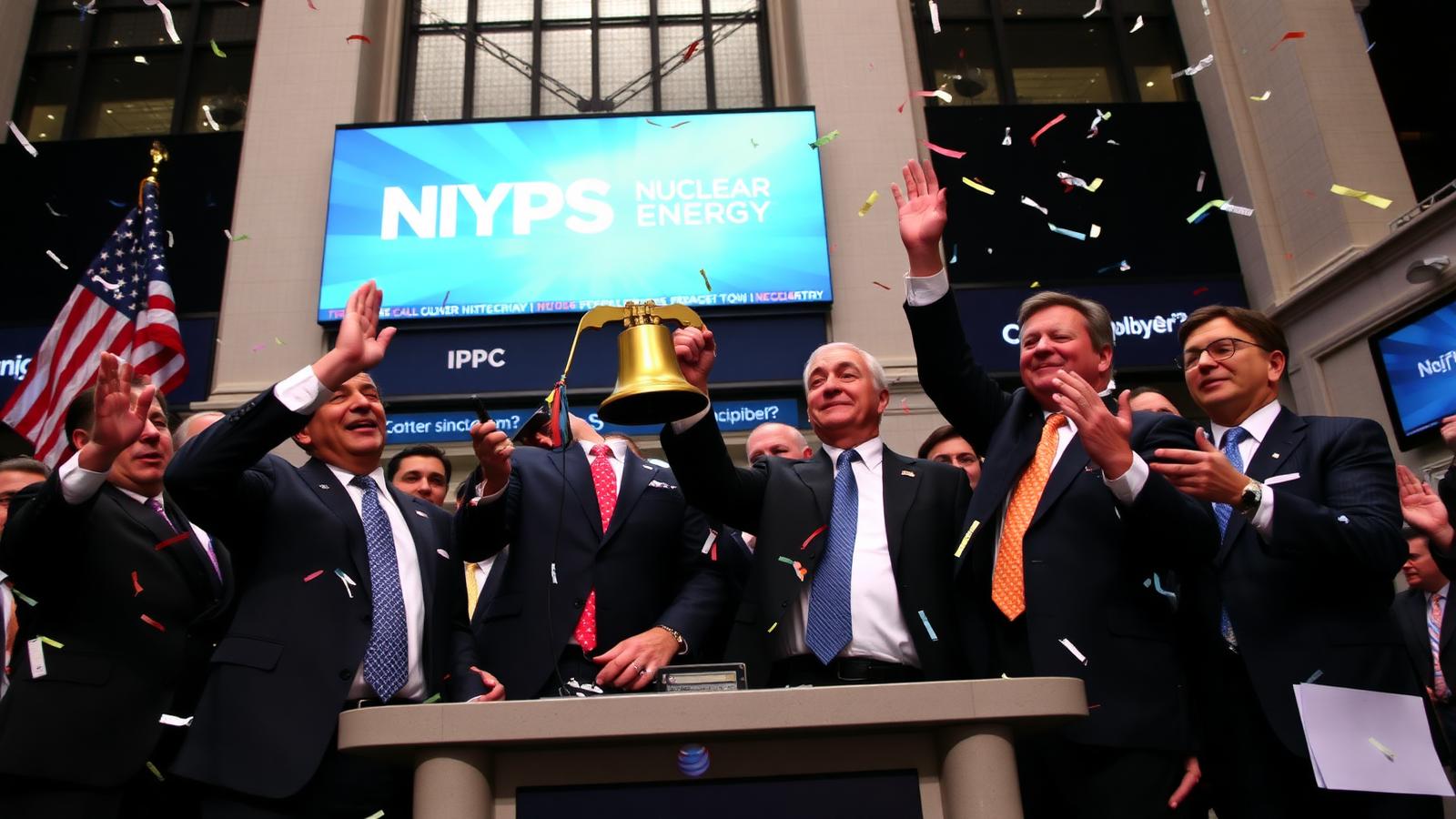
Most major retail brokerages - Fidelity, Schwab, and Robinhood - will list X-Energy shares on day one. Day-one IPO pops are common and just as commonly fade within 30 days as lock-up expirations and secondary offerings dilute. The historically best risk-adjusted entry for retail investors in capital-intensive infrastructure IPOs has been waiting 90–180 days post-listing rather than buying the open.
Bottom Line: Buy, Wait, or Skip?
If you have a multi-decade time horizon and you believe AI demand for 24/7 carbon-free baseload power is real, X-Energy is one of the highest-quality pure-play SMR investments you can make. The combination of the Amazon offtake, the DOE backing, and the TRISO fuel monopoly is genuinely rare. But the valuation already prices in execution success, so position-size accordingly: a 1–3% portfolio weight on the IPO and a willingness to add on regulatory milestone announcements is more durable than a single all-in day-one buy.
Frequently Asked Questions
When is the X-Energy IPO?
X-Energy filed S-1 paperwork in 2026 with a public listing expected mid-to-late 2026. Final pricing and bell-day timing will be set in the days before listing - check the SEC EDGAR system for official updates.
What ticker will X-Energy trade under?
The ticker has not been officially confirmed at filing. Most sources expect a Nasdaq listing under a ticker like XENG or XEN.
Is X-Energy profitable?
No. Like most pre-commercial nuclear and clean energy companies, X-Energy is pre-revenue and burns cash. The company is funded by Amazon, the DOE, and prior private rounds.
How much did Amazon invest in X-Energy?
Amazon has publicly disclosed more than $500 million in direct equity investment plus a multi-reactor offtake agreement, with options for additional capacity tied to AWS data center growth.
What's the difference between X-Energy and Oklo or NuScale?
All three are US small modular reactor developers. X-Energy uses high-temperature gas-cooled TRISO fuel and owns its fuel supply chain. Oklo uses sodium-cooled fast-reactor technology. NuScale uses light-water pressurized small modules. X-Energy's TRISO fuel ownership is its biggest structural advantage.
Sources
- X-Energy company website https://x-energy.com/
- DOE Advanced Reactor Demonstration Program https://www.energy.gov/
According to our editorial policy, every source link above was opened and checked against the claim it supports on .