Transfer on Death Deed 2026: Which States Allow It & How to File
A transfer on death deed lets a US homeowner in 30-plus states pass real estate directly to a named beneficiary at death for a $15-$75 recording fee - no probate, no attorney required. This is the complete 2026 guide: which states allow it, how to file, and when a living trust is the better choice.

A transfer on death deed (TOD deed, sometimes called a beneficiary deed or Lady Bird deed depending on state) is the simplest, cheapest, and most under-used probate-avoidance tool available to American homeowners in 2026. For a filing fee usually between $15 and $75 and roughly 30 minutes of paperwork, a US homeowner in one of the 30-plus states that allow TOD deeds can transfer real property directly to a named beneficiary at death, bypassing probate entirely for that asset. This guide covers every state that allows the tool, how to file one, when it is the right choice, and the specific traps that trip up first-time filers.
What a TOD Deed Actually Does
A transfer on death deed is a signed and recorded deed that names one or more beneficiaries to receive the property automatically at the owner's death. During the owner's lifetime, the deed has no legal effect: the owner retains full ownership, can sell the property, can refinance, can lease, and can revoke the TOD designation at any time. At death, the beneficiary presents a certified death certificate and a short affidavit to the county recorder, the property title updates automatically, and the transfer is complete. No probate. No court supervision. No attorney required (though a title company review is smart).
The Beneficiary deed does not create any ownership interest for the beneficiary during the owner's life. This distinguishes it sharply from adding a beneficiary as a joint tenant, which is a common mistake that creates immediate gift tax exposure, exposes the property to the joint tenant's creditors, and cannot be reversed without the joint tenant's consent. The TOD deed accomplishes the same probate-avoidance goal without any of those side effects.
Which States Allow TOD Deeds in 2026?
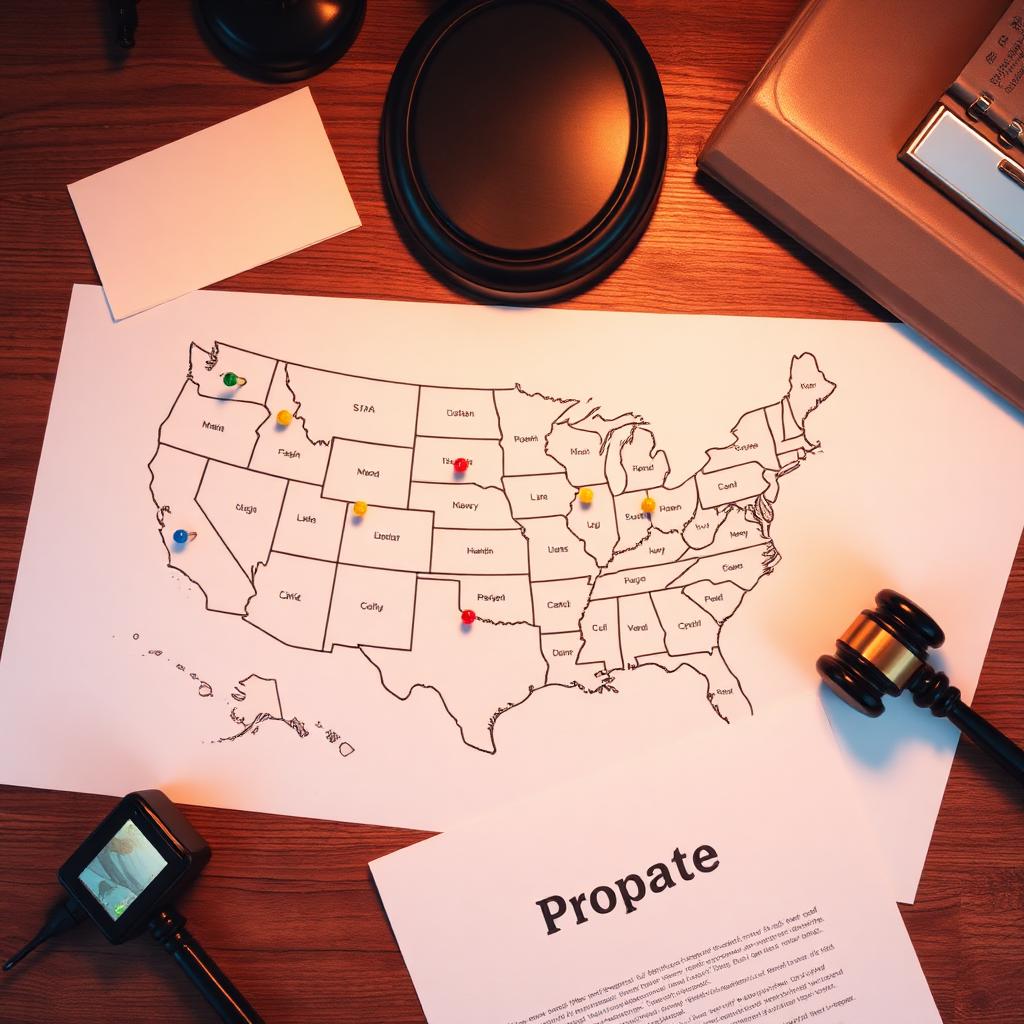
The Uniform Real Property Transfer on Death Act (URPTODA) has been adopted, with variations, in a growing number of US states. As of 2026, TOD deeds (or their equivalent, such as Florida's Lady Bird Deed and Michigan's Ladybird Deed) are recognized in the following states. Note that details, form language, and revocation rules vary. Always use a form specifically for your state.
- States with statutory TOD deed authority: Alaska, Arizona, Arkansas, California, Colorado, District of Columbia, Hawaii, Illinois, Indiana, Kansas, Maine, Minnesota, Mississippi, Missouri, Montana, Nebraska, Nevada, New Mexico, North Dakota, Ohio, Oklahoma, Oregon, South Dakota, Texas, Utah, Virginia, Washington, West Virginia, Wisconsin, Wyoming
- Enhanced life estate deed (Lady Bird Deed) states with equivalent functionality: Florida, Michigan, Texas (in addition to statutory TOD), Vermont, West Virginia
- States that do NOT currently allow TOD deeds and where you must use a living trust or joint tenancy for probate avoidance on real estate: Alabama, Connecticut, Delaware, Georgia, Idaho, Iowa, Kentucky, Louisiana, Maryland, Massachusetts, New Hampshire, New Jersey, New York, North Carolina, Pennsylvania, Rhode Island, South Carolina, Tennessee
Two states deserve special attention. Florida uses the Lady Bird Deed (enhanced life estate deed) rather than a statutory The deed, but the functional effect is identical for probate avoidance and works cleanly for Florida homesteaders. New York does NOT allow TOD deeds as of 2026, which is one reason revocable living trusts are heavily used in New York estate planning.
How to File a TOD Deed in 2026
- Get a state-specific TOD deed form (the county recorder's website, the state bar's public forms page, or a licensed title company are all good sources)
- Fill in the current owner's name exactly as it appears on the existing deed, the property's full legal description (from the current deed, not just the street address), and the named beneficiary or beneficiaries
- Sign the deed in front of a notary public (all states require notarization; some also require witnesses)
- Record the deed with the county recorder's office in the county where the property sits. The recording fee is typically $15-$75 depending on county
- Keep a certified copy for your records and give a copy to the named beneficiary along with instructions on how to complete the post-death transfer
Recording is not optional. A signed but unrecorded Beneficiary deed has no effect. This is the single most common Beneficiary deed failure mode. Do the recording the same day you sign, either in person at the county recorder or by mail with the correct fee.
TOD Deed vs Living Trust vs Joint Tenancy
The deed
Cheapest option ($15-$75 per property). Works only for real estate. Fully revocable during life. No probate at death. No gift tax exposure. Ideal for a single-property homeowner in a TOD state who wants probate avoidance on the house but does not need a trust for other reasons.
Revocable living trust
More expensive ($500-$4,500). Works for ALL asset types, not just real estate. Handles incapacity as well as death. Preferred when you have multiple properties (especially multi-state), a business interest, minor children, or other complex needs. See our full Living Trust vs Will 2026 comparison.
Joint tenancy with right of survivorship
Often marketed as free and simple. It is neither. Adding a beneficiary as joint tenant creates an immediate taxable gift (roughly half the property value), exposes the property to the joint tenant's creditors and divorce, and cannot be reversed without the joint tenant's consent. Avoid this route for adding an adult child to a home title. Use a TOD deed or a trust instead.
Multiple Beneficiaries, Contingent Beneficiaries, and Percentages
Most TOD deed statutes allow you to name multiple beneficiaries and specify percentages. You can name your two children as 50/50 beneficiaries. You can name a primary beneficiary and a contingent beneficiary who inherits only if the primary dies first. What you generally cannot do easily via Beneficiary deed alone is create ongoing trust management or age-restrict the inheritance. If a beneficiary is a minor or has special needs, or if you want assets managed for years rather than transferred outright, use a living trust instead.
How to Revoke or Change a TOD Deed
A TOD deed can be revoked or changed anytime during the owner's competent life. To revoke, execute a formal revocation document (state-specific form), or execute and record a new The deed naming a different beneficiary (a later recorded The deed supersedes an earlier one in nearly all states). Selling the property automatically extinguishes the TOD designation because the deed transfer removes the property from the estate entirely. Do NOT try to revoke by simply tearing up your copy of the recorded deed - only a properly executed revocation instrument, filed with the county recorder, has legal effect.
When a TOD Deed Is NOT the Right Tool
- Your state does not recognize TOD deeds (see the state list above - use a trust)
- You own real estate in a state that does not recognize TOD deeds and cannot restructure holding
- You need to condition the inheritance on any factor (beneficiary reaches age 25, beneficiary completes rehab, etc.) - use a trust
- The named beneficiary is a minor or has special needs - use a trust for the beneficiary rather than direct transfer
- The property has a mortgage with a due-on-sale clause and the lender may accelerate on transfer (rare in practice but check)
- There is a real risk of family conflict about who should inherit - a professionally drafted trust with a no-contest clause is stronger
Bottom Line
If you own a home in one of the 30-plus US states that recognize transfer on death deeds, and you have no other reason to build a full living trust, a TOD deed is the single most cost-effective probate-avoidance step you can take this month. Cost: $15-$75 in recording fees, one notary appointment, and 30 minutes of paperwork. Benefit: your primary residence transfers to your named beneficiary at death without ever entering probate court. Every US homeowner in a TOD state should consider one as a baseline planning tool, sitting alongside a will, a healthcare directive, and updated beneficiary designations. See our full Estate Planning 2026 guide for the complete document stack.
Frequently Asked Questions
Does a transfer on death deed avoid probate?
Yes, completely, for any real estate covered by the deed. At the owner's death, the named beneficiary presents a certified death certificate and short affidavit to the county recorder, and title transfers automatically without any probate court involvement.
Which US states allow transfer on death deeds in 2026?
Roughly 30-plus states plus DC, including California, Texas, Ohio, Colorado, Arizona, Nevada, Illinois, Virginia, Washington, Wisconsin, and more. Florida achieves the same result through the Lady Bird Deed. States that do NOT allow TOD deeds include New York, Massachusetts, New Jersey, Pennsylvania, Georgia, and North Carolina - use a living trust in those states.
How much does it cost to file a TOD deed?
The county recording fee is typically $15-$75. The deed form itself is often free from the county recorder or state bar website. A notary charges $5-$25. Total out-of-pocket cost is usually under $100.
Can I revoke a transfer on death deed?
Yes, anytime during your competent lifetime. Execute and record a formal revocation instrument (state-specific form) OR execute and record a new TOD deed naming a different beneficiary. Selling the property extinguishes the deed automatically. Tearing up your copy does nothing - the recorded deed at the county is what controls.
The deed vs quit claim deed - what is the difference?
A quit claim deed transfers ownership immediately during life. A TOD deed transfers ownership only at death and leaves you as full owner in the meantime. Never use a quit claim deed to add an adult child to your home title for estate purposes - it creates immediate gift tax exposure and cannot be reversed without their consent.
Do I still need a will if I have a TOD deed?
Yes. A Beneficiary deed only covers the specific real estate named in it. You still need a will for personal property, any assets not covered by beneficiary designations, and to name a guardian for minor children.
Sources
- Uniform Law Commission - URPTODA https://www.uniformlaws.org/
- IRS - Gift Tax https://www.irs.gov/businesses/small-businesses-self-employed/gift-tax
- Consumer Financial Protection Bureau https://www.consumerfinance.gov/
According to our editorial policy, every source link above was opened and checked against the claim it supports on .