Robinhood × OpenAI Partnership: How AI-Powered Trading Is Coming to Your Brokerage Account in 2026
Robinhood and OpenAI have announced a landmark integration that puts GPT-class artificial intelligence directly inside the Robinhood trading app. Real-time stock research, plain-English options strategies, portfolio risk analysis, and personalized rebalancing - all conversational, all in-app. Here is exactly what changes, who benefits, and the regulatory risks the SEC is already flagging.
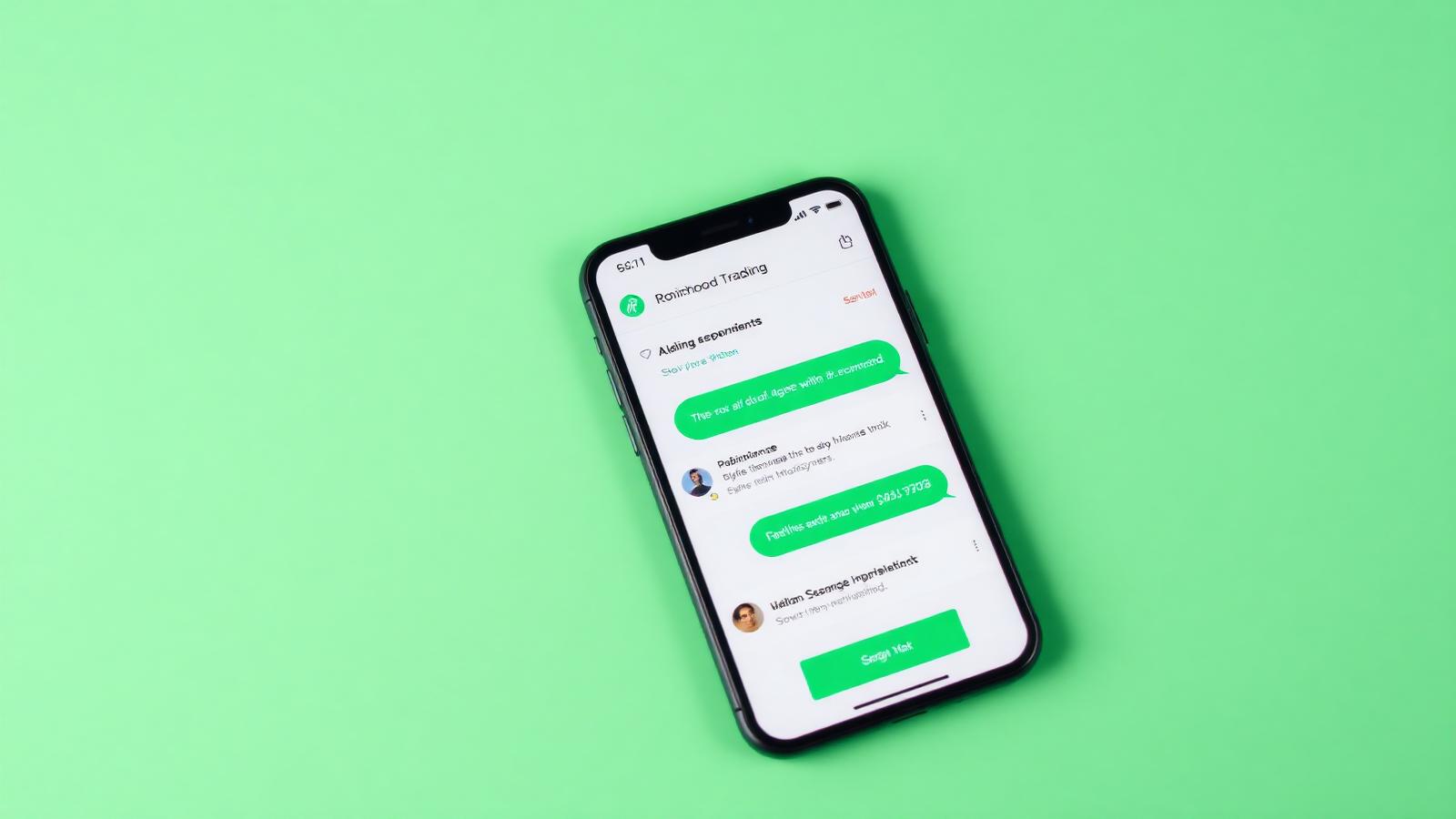
Robinhood and OpenAI have announced a multi-year strategic partnership that embeds GPT-class large language model capabilities directly into the Robinhood mobile and web trading apps for all 25+ million active US users. For the retail investing world, this is not a feature release - it is a category shift. For the first time, a mainstream consumer brokerage is putting a conversational, reasoning-capable AI in front of every trade decision a retail user makes.
The integration goes far beyond a chatbot. Users can now ask the in-app AI assistant - branded internally as Robinhood Cortex - to research a stock, summarize an earnings call, build an options strategy, run a portfolio risk analysis, or even propose a tax-loss harvesting trade. The model is fine-tuned on Robinhood's own market data feeds and is designed to never give a direct buy/sell recommendation, but the practical effect is dramatically lower friction for everything except the click of the trade button itself.
What Robinhood × OpenAI Actually Does Inside the App

- Conversational stock research: 'Why is NVDA down today?' returns a sourced, real-time summary
- Earnings call summaries: 10-K, 10-Q, and earnings transcript summarization in seconds
- Plain-English options strategies: 'Build me a covered call on AAPL' returns the full ticket pre-filled
- Portfolio risk analysis: real-time concentration, sector, and beta analysis on your actual holdings
- Tax-loss harvesting suggestions: AI scans your account and proposes specific lots to sell
- Personalized rebalancing: target allocation adjustment with one-tap execution
Why This Partnership Matters - Beyond the Headlines
Three structural reasons this partnership is bigger than it looks. First, distribution: OpenAI instantly gets the most engaged retail investing audience in the world (25M+ users, 80% under age 40). Second, data: Robinhood gives OpenAI's models access to a real-time stream of how millions of retail investors actually behave around news events - a training corpus no competitor can replicate. Third, lock-out: the deal is reportedly multi-year exclusive, meaning Anthropic, Google Gemini, and xAI cannot offer comparable in-app assistants on Robinhood through at least 2029.
What Retail Investors Should Actually Do With AI Trading
The honest answer: use the AI for research and execution friction reduction, not for prediction. The single highest-value use case for an in-app LLM is summarizing the dense, unstructured material that every serious investor needs to read - 10-K risk sections, earnings call Q&A, FOMC minutes - and converting it into 60-second briefings. The lowest-value use case is asking 'should I buy NVDA?' Models cannot predict prices, and any brokerage AI that confidently answers a buy/sell question is exposing both the user and the firm to regulatory liability.

SEC and FINRA Are Already Watching
Regulators have moved from 'curious' to 'actively scrutinizing' on AI in retail brokerage. The SEC's 2024 predictive analytics rule already restricts firms from using AI in ways that put the firm's interest ahead of the customer's. FINRA Notice 24-09 requires registered firms to supervise AI tools the same way they supervise human registered representatives. Expect 2026 enforcement actions against any brokerage whose AI is found to have nudged users toward higher-margin products like options or margin loans.
Competitive Response: What Schwab, Fidelity, and E*TRADE Will Do
Schwab and Fidelity already have internal AI assistants in beta but have not committed to a single foundation-model partner. Expect Fidelity to announce an Anthropic Claude partnership within six months and Schwab to either build in-house on Microsoft Azure or sign with Google Gemini. The interactive brokers and the institutional crowd will mostly stay quiet - their clients are professionals who value deterministic tools over conversational ones.
Bottom Line for Robinhood Users
If you are already a Robinhood user, the AI assistant is a meaningful upgrade and worth turning on for research workflows. If you are not, this partnership alone is not a reason to switch brokerages - Fidelity and Schwab will have comparable AI tools within 12 months, and their underlying brokerage features (fractional bonds, mutual funds, retirement planning) remain materially better. The right mental model: Robinhood Cortex is an excellent research assistant, not an investment advisor.
Frequently Asked Questions
Is the Robinhood OpenAI assistant free?
Yes, for all Robinhood users including the free tier. Robinhood Gold subscribers get extended-context conversations, faster response times, and access to a more advanced reasoning model.
Does the Robinhood AI assistant give buy or sell recommendations?
No. By design and by SEC compliance requirements, the assistant does not give direct buy/sell recommendations on individual securities. It provides research, summaries, and strategy explanations only.
Is my Robinhood data shared with OpenAI?
Robinhood states that user-identifiable account data is not used to train OpenAI's foundation models. Aggregated, anonymized behavior may be used to improve the in-app experience.
Can I use ChatGPT directly to trade on Robinhood?
No standalone ChatGPT cannot place trades on your Robinhood account. Trade execution remains exclusively inside the Robinhood app with all standard safeguards.
Will Fidelity and Schwab get the same feature?
They will get comparable features but from different AI providers. Expect Fidelity to partner with Anthropic and Schwab to either build in-house or partner with Google Gemini within the next 12 months.
Sources
- SEC Predictive Data Analytics Rule https://www.sec.gov/
- FINRA Notice 24-09 - AI Supervision https://www.finra.org/
According to our editorial policy, every source link above was opened and checked against the claim it supports on .