The ETH/BTC Ratio Just Hit a 3-Month High - Is Ethereum's Comeback Real?
Ethereum's relative strength against Bitcoin has surged to a 3-month high. With on-chain activity up 41%, 284,000 new users in Q1, and stablecoin supply at $180 billion, the data suggests this may be more than a dead-cat bounce.

For most of early 2026, Ethereum has been the market's unloved asset. While Bitcoin held steady above $70,000 on the back of institutional accumulation and strategic reserve narratives, ether drifted lower against its larger peer, pushing the ETH/BTC ratio to multi-year lows in January. That dynamic is reversing - and the data behind the reversal is more structural than most traders realize.
The ETH/BTC ratio - a closely watched gauge of Ethereum's relative strength against Bitcoin - has climbed to approximately 0.031, its highest reading since January. Ethereum activity has jumped 41% week-over-week, stablecoin supply on the network has hit a record $180 billion, and spot ETH ETFs are pulling in capital for the first time in months.
What Is the pair and Why Does It Matter?
The ratio tracks how many Bitcoin one Ethereum token is worth. When the ratio rises, ether is outperforming bitcoin in relative terms. When it falls, capital is rotating from Ethereum toward Bitcoin. It is widely regarded as a risk-appetite barometer for the broader crypto market: a rising ETH/BTC ratio historically signals that capital is flowing into altcoins, DeFi and higher-beta assets.
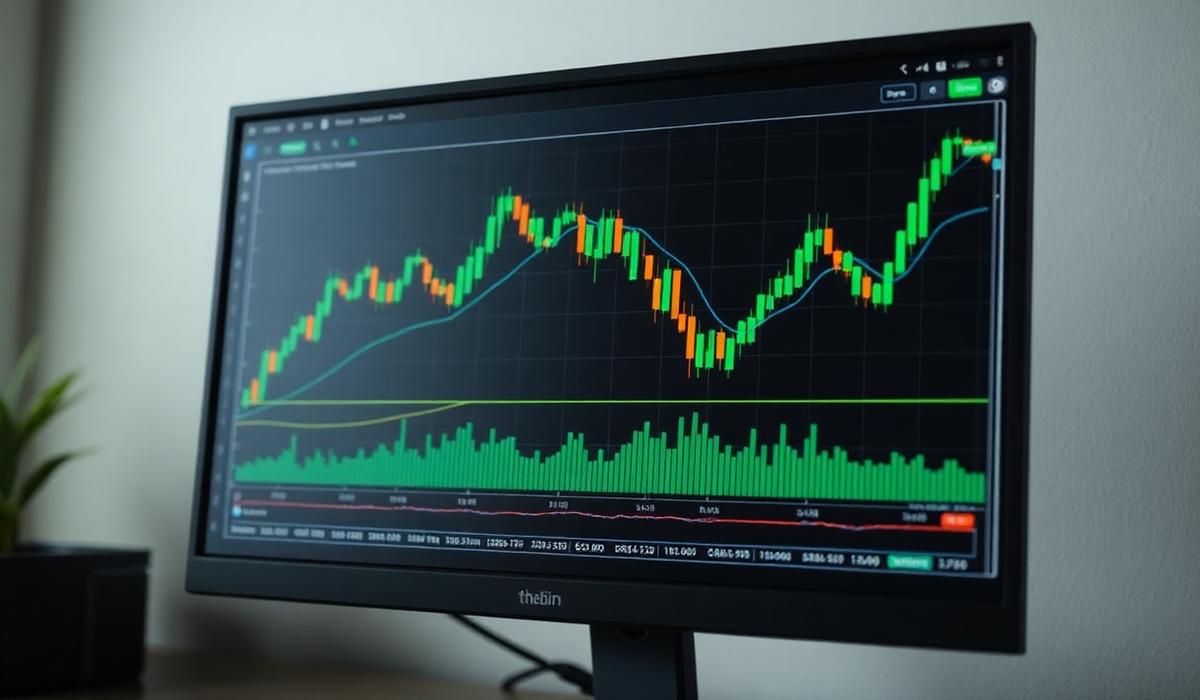
In October 2025, Bitcoin surged to an all-time high of $126,000 following its halving-driven supply squeeze and relentless ETF inflows. The cross collapsed to ~0.024 as capital concentrated in the dominant asset. The reversal now underway suggests the market is transitioning from a Bitcoin-only bid to a broader crypto recovery - a pattern that has historically preceded sustained altcoin rallies.
On-Chain Data: Ethereum's Usage Is Surging
The most compelling evidence for this rally's sustainability lies in Ethereum's on-chain metrics, which are improving on nearly every front:
- Daily active addresses rose 18% in April to 580,000, the highest since mid-2025.
- Transaction volume jumped 41% week-over-week, driven primarily by DeFi and stablecoin transfers.
- Ethereum added 284,000 net new addresses in Q1 2026 - the strongest quarter of user growth since the 2021 bull run.
- Gas fees have stabilized at levels that suggest genuine usage, not speculative mania.
Stablecoin Supply Hits Record $180 Billion on Ethereum
Stablecoin supply is the single most reliable measure of idle capital waiting to be deployed in crypto markets. Ethereum's share of global stablecoin supply has climbed back above 55%, with total stablecoin value on the network reaching $180 billion - a record. Tether (USDT) and Circle's USDC account for the vast majority, but newer entrants like Ethena's USDe and MakerDAO's DAI have grown steadily.
Why does this matter? Stablecoins are the ammunition. When stablecoin supply on Ethereum rises, it means capital is entering the ecosystem and sitting on the sideline, ready to rotate into ETH, DeFi protocols or Layer 2 tokens. Historically, major rallies in ether have been preceded by exactly this pattern: stablecoin supply expansion followed by deployment.
Bitcoin's Coinbase Premium: Still Bullish, But Fading?
While Ethereum catches a bid, Bitcoin is not collapsing. Bitcoin's so-called Coinbase premium - the price difference between BTC on Coinbase (a proxy for US institutional demand) and other exchanges - has been positive for 14 consecutive days, the longest such streak since Bitcoin hit its all-time high of $126,000 in October 2025.
This suggests institutional demand for Bitcoin remains healthy. The key difference is that ETH is now gaining at the margin while BTC holds steady - a classic rotation pattern. The rising tide is lifting both boats, but Ethereum's boat is accelerating.
ETF Flows Are Diverging: ETH In, BTC Mixed
Perhaps the most significant development in April 2026 is the divergence in ETF flows. Spot Ethereum ETFs recorded their first consecutive week of net inflows since December 2025, with BlackRock's ETHA product leading the pack. Meanwhile, spot Bitcoin ETFs have seen mixed weeks - still net positive on the month, but with several days of outflows that were absent from the fall 2025 surge.
- ETH ETF net inflows in April: ~$340 million (first sustained positive month since Q4 2025).
- BTC ETF net inflows in April: ~$620 million, but with 4 days of net outflows.
- ETHA (BlackRock) crossed $8 billion in AUM, making it the third-largest crypto ETF.
This flow divergence matters because it represents real institutional money choosing to add ETH exposure at the margin - a vote of confidence in Ethereum's fundamentals that was absent for much of early 2026.
DeFi Renaissance: Total Value Locked Rebounds
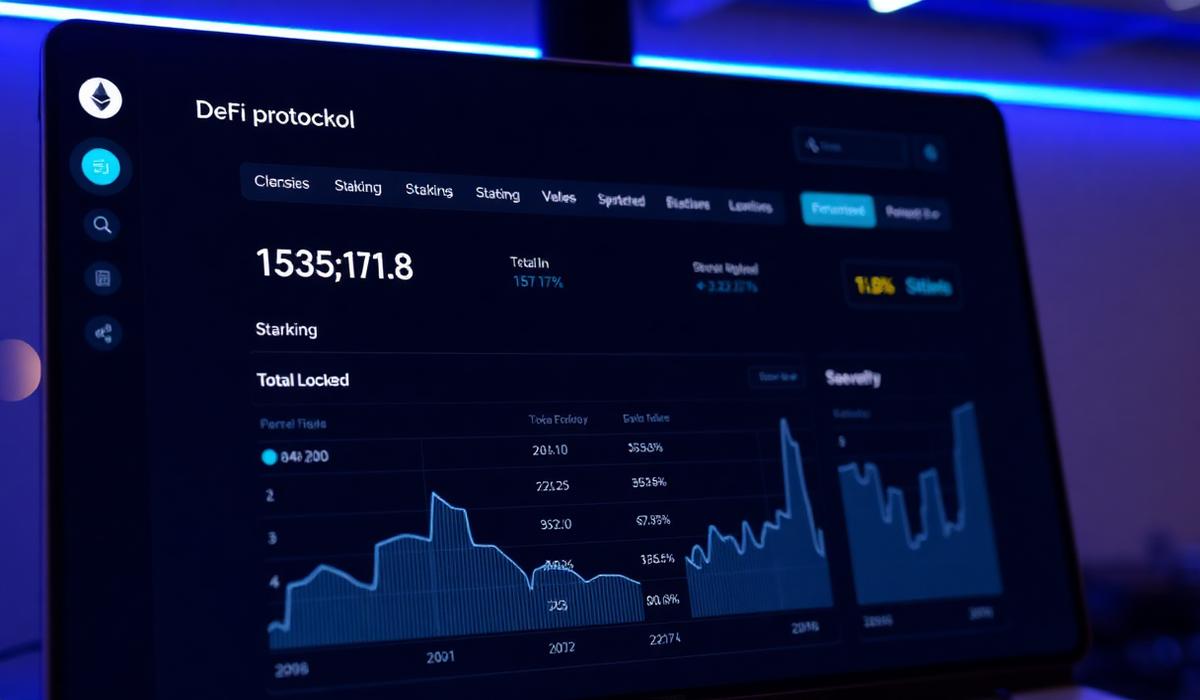
Ethereum's decentralized finance ecosystem - the primary source of network fee revenue - is experiencing a quiet renaissance. Total value locked (TVL) across Ethereum DeFi protocols has risen 22% since February, driven by three factors:
- Restaking protocols like EigenLayer have attracted over $15 billion in deposits.
- Liquid staking tokens (stETH, rETH) are increasingly used as collateral in lending markets.
- Real-world asset (RWA) tokenization is gaining traction, with BlackRock's BUIDL fund and Franklin Templeton's FOBXX leading institutional adoption.
When the ETH/BTC ratio moves, it tells you capital is graduating from fear to ambition. That's what a market recovery looks like.
Layer 2 Growth: Ethereum's Scalability Story Matures

One of the bull arguments for Ethereum in 2026 is the maturation of its Layer 2 ecosystem. Base (Coinbase's L2), Arbitrum and Optimism now collectively process more daily transactions than Ethereum mainnet, at a fraction of the cost. EIP-4844 (Proto-Danksharding), implemented in early 2024, has reduced L2 posting costs by over 90%.
This changes the investment thesis for ETH. Instead of 'Ethereum is too expensive to use,' the narrative is shifting to 'Ethereum is the settlement layer for an ecosystem that processes millions of transactions daily through its L2s.' Whether that narrative sustains ETH's relative outperformance depends on fee revenue flowing back to the mainnet.
Risks to the ETH/BTC Recovery
No recovery is risk-free. Several factors could derail Ethereum's relative momentum:
- Regulatory clarity on staking remains unresolved - the SEC has not approved staking for US ETH ETFs, capping yield appeal.
- Solana and competing Layer 1s continue to capture mindshare and developer activity in niche sectors (memecoins, gaming).
- A macro shock - particularly a hawkish Fed surprise - would likely hit higher-beta assets like ETH harder than BTC.
- Ethereum's revenue model depends on L2 fee flow, which is still evolving and could centralize on a few dominant rollups.
Technical Levels to Watch
For traders monitoring the pair, the key levels are:
- Support: 0.028 (February low) - a break below would invalidate the recovery thesis.
- Resistance: 0.035 (200-day moving average) - a break above would confirm a trend change.
- Current level: ~0.031 - sitting at the midpoint, requiring further confirmation.
In absolute terms, ETH is trading near $2,400, with resistance at $2,650 (Q4 2025 high) and support at $2,100 (March 2026 low). A sustained move above $2,650 would likely pull the ETH/BTC ratio above the critical 0.035 resistance.
What History Says About The ratio Reversals
Looking at previous cycles, ETH/BTC ratio reversals from multi-year lows have historically preceded 'altseason' - a period where altcoins broadly outperform Bitcoin. In 2020, the ratio bottomed at 0.024 before Ethereum rallied 1,600% over the next 18 months. In 2019, a similar bottom preceded a 300% rally in ETH.
Past performance is not predictive, but the pattern is consistent: when capital rotates from Bitcoin to Ethereum, it tends to accelerate as DeFi yields rise, new users enter, and liquidity begets liquidity. The question for 2026 is whether the structural improvements in Ethereum's ecosystem - L2 scaling, stablecoin adoption, institutional ETFs - make this rotation more durable than previous cycles.
The Bottom Line
The ETH/BTC ratio recovery is not a single data point - it is a convergence of on-chain usage growth, stablecoin inflows, ETF demand, DeFi activity and technical improvement. Whether Ethereum can sustain this momentum depends on continued network growth, regulatory progress on staking, and macro conditions remaining supportive of risk assets.
For investors, the signal is clear: the market is beginning to rotate from a Bitcoin-dominant regime to a broader crypto recovery. Whether you act on that signal depends on your time horizon and conviction in Ethereum's roadmap. But the data - for the first time in months - favors the bulls.
Frequently Asked Questions
What is the pair and why is it important?
The ratio measures how many Bitcoin one Ethereum is worth. It serves as a barometer for risk appetite in crypto markets - a rising ratio signals capital is flowing from Bitcoin into Ethereum and altcoins, often preceding broader market rallies.
Why is the ETH/BTC ratio recovering in April 2026?
The recovery is driven by a 41% surge in Ethereum on-chain activity, record $180 billion stablecoin supply, positive ETH ETF inflows, and renewed DeFi growth - particularly in restaking and real-world asset tokenization.
Is Ethereum a better investment than Bitcoin in 2026?
It depends on your thesis. Ethereum offers higher beta (larger moves in both directions), yield through staking (~3%), and exposure to DeFi/L2 growth. Bitcoin offers lower volatility, institutional momentum, and a simpler store-of-value narrative. Many portfolios hold both.
What could stop the ETH/BTC recovery?
Key risks include regulatory setbacks on ETH ETF staking, a macro shock that hits risk assets, competition from Solana and other L1s, and potential centralization of Ethereum's L2 fee revenue in a few dominant rollups.
Sources
- CoinDesk - ETH/BTC ratio bounces from 2026 lows https://www.coindesk.com/markets/2026/04/15/ether-bitcoin-ratio-bounces-from-2026-lows-in-signs-of-broader-crypto-recovery
- CoinDesk - Ether outpaces Bitcoin as ETF flows split https://www.coindesk.com/markets/2026/04/14/ether-outpaces-bitcoin-as-etf-flows-split-and-ethereum-activity-jumps-41-on-week
- CoinDesk - Bitcoin Coinbase premium 14-day streak https://www.coindesk.com/markets/2026/04/22/bitcoin-s-coinbase-premium-just-posted-its-longest-bullish-streak-since-october-s-record-high-of-usd126-000
- BitcoinWorld - ETH/BTC rebound analysis https://bitcoinworld.co.in/eth-btc-rebound-market-recovery-analysis/
According to our editorial policy, every source link above was opened and checked against the claim it supports on .